A refrigerator compressor normally creates heat while it runs. But when the compressor feels unusually hot and the refrigerator compartment is still warm, the appliance is telling you that the cooling system is working under stress—or that cooling is not being produced or distributed correctly.
With a Viking refrigerator, that symptom deserves a careful diagnosis. Premium built-in and freestanding models may use variable-speed compressor technology, multiple fans, electronic temperature sensors, sophisticated controls, and tightly managed airflow. On some Viking refrigeration platforms, the refrigerator and freezer may also be served differently depending on the series and configuration.
In Bay Area homes, the problem can become more noticeable during warm weather, frequent entertaining, remodeling, or periods when dust and pet hair restrict the condenser. Coastal moisture and tight custom cabinetry may add to the workload. The compressor can keep running and getting hotter while food temperatures continue to rise.
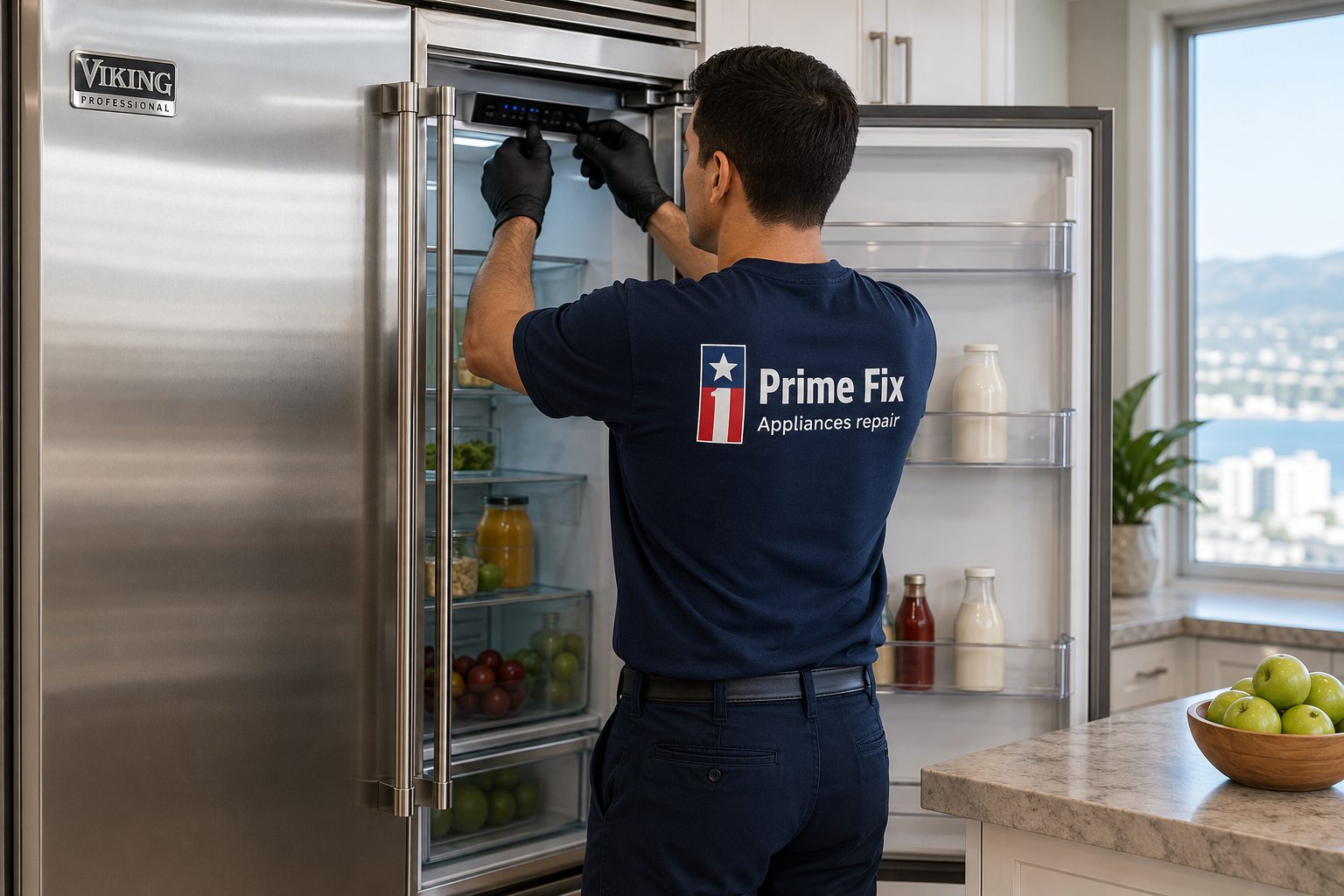 A hot compressor paired with a warm refrigerator can point to airflow, fan, electrical, control, or sealed-system trouble.
Is a Hot Refrigerator Compressor Normal?
Some compressor warmth is normal. The compressor pressurizes refrigerant and releases heat through the condenser, so it should not feel cool during active operation. It may also run longer after a large grocery load, repeated door openings, a power interruption, or a temperature adjustment.
The concern is not heat by itself. The concern is the combination of excessive heat, extended running, clicking or cycling, weak or absent cooling, and rising food temperatures. That pattern suggests the refrigerator cannot reject heat, cannot circulate cold air, cannot start the compressor correctly, or has a problem inside the refrigeration system.
Common Causes at a Glance
| Possible Cause | What You May Notice | Why the Compressor Gets Hot |
|---|---|---|
| Dirty Condenser | Constant running, warm cabinet, slow cooling, louder operation. | The refrigeration system cannot release heat efficiently. |
| Condenser Fan Failure | Little airflow near the mechanical area, overheating, frequent shutdowns. | Heat accumulates around the compressor and condenser. |
| Start Component Problem | Clicking, humming, brief attempts to start, then silence. | The compressor repeatedly attempts to start and overheats. |
| Evaporator Fan or Airflow Issue | Freezer may be cold while refrigerator is warm; weak interior airflow. | The compressor keeps running because cold air is not reaching the cabinet. |
| Defrost Failure | Frost behind an interior panel, temperature swings, weak airflow. | Ice blocks the evaporator while the compressor continues running. |
| Sealed-System Trouble | Both sections warm, long run times, little cooling response. | The compressor works without producing the expected refrigeration effect. |
1. Dirty Condenser Coils or Restricted Ventilation
A refrigerator cools by moving heat out of the cabinet and releasing it through the condenser. When dust, pet hair, kitchen grease, or construction debris coats the condenser, heat remains trapped in the system. The compressor must run longer and at a higher thermal load.
This is particularly relevant in San Francisco homes that have recently been remodeled or in kitchens where the refrigerator sits inside tight cabinetry. If the designed intake or exhaust path is blocked by trim, stored items, insulation, or debris, even a clean condenser may struggle to breathe.
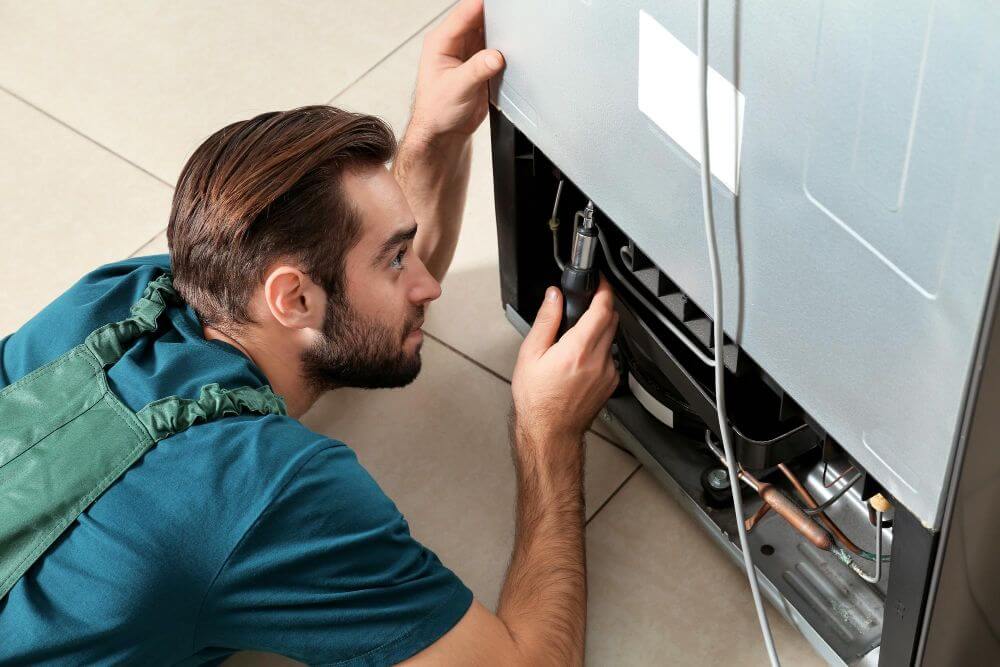 Condenser condition and ventilation should be checked before assuming the compressor itself has failed.
2. Condenser Fan Is Not Moving Enough Air
The condenser fan helps move air across the condenser and compressor area. If the fan motor is failing, the blade is obstructed, or the control is not sending proper power, heat can build rapidly. The compressor may become very hot and eventually stop on thermal protection.
A failed condenser fan can sometimes produce a pattern where the refrigerator cools briefly after being off, then warms again as heat accumulates. You may also hear a hum, rattle, or repeated clicking near the mechanical compartment.
3. Start Relay, Inverter, or Electrical Starting Problem
Depending on the Viking model, compressor starting and speed may be controlled by different electrical components. A conventional start device, inverter, control board, wiring connection, or power-supply issue can prevent the compressor from running correctly.
A common symptom is a compressor that hums or attempts to start, becomes hot, then shuts down. After cooling, it tries again. Replacing the compressor without testing the start and control circuit can lead to an expensive misdiagnosis.
4. Evaporator Fan or Internal Airflow Failure
The compressor may be producing refrigeration correctly while the cold air never reaches the refrigerator compartment. A weak evaporator fan, blocked air vent, failed damper, ice buildup, or control problem can interrupt circulation.
This often creates a misleading symptom: the compressor runs and feels hot, the freezer may remain cold, but the fresh-food section is warm. Because the temperature sensor continues calling for cooling, the compressor may operate longer than normal.
5. Defrost System Failure and Hidden Frost
If the evaporator becomes covered in ice, air cannot pass through it. The refrigerator may continue running almost nonstop while interior temperatures rise. Possible causes include the defrost heater, sensor, control, wiring, drain, or a fan affected by ice.
Visible frost is not always present. The blockage may be hidden behind an interior panel. Manually melting the ice can temporarily restore cooling, but the problem will return if the failed component is not diagnosed.
Compressor hot and food getting warmer?
If basic airflow and setting checks do not restore cooling, Prime Fix can diagnose condenser, fan, start-control, defrost, and sealed-system problems in Viking refrigerators across San Francisco and the Bay Area.
6. Faulty Temperature Sensor or Main Control
Viking refrigerators use electronic sensors and controls to determine when the compressor and fans should run. If a sensor reports the wrong temperature, or a control does not operate a fan or compressor correctly, the appliance may run too long without achieving stable cooling.
Electronic faults can imitate mechanical failures. A professional diagnosis should compare actual cabinet temperatures, sensor readings, fan operation, compressor behavior, and control outputs before parts are ordered.
7. Refrigerant Leak, Restriction, or Weak Compressor
When the compressor runs but the refrigerator produces little cooling, the problem may be inside the sealed refrigeration system. A refrigerant leak, restriction, inefficient compressor, or other internal fault can leave the compressor working hard without moving enough heat out of the cabinet.
Sealed-system diagnosis requires pressure and temperature measurements, electrical testing, leak detection, and an understanding of the specific Viking refrigeration platform. Adding refrigerant without locating the cause is not a proper repair.
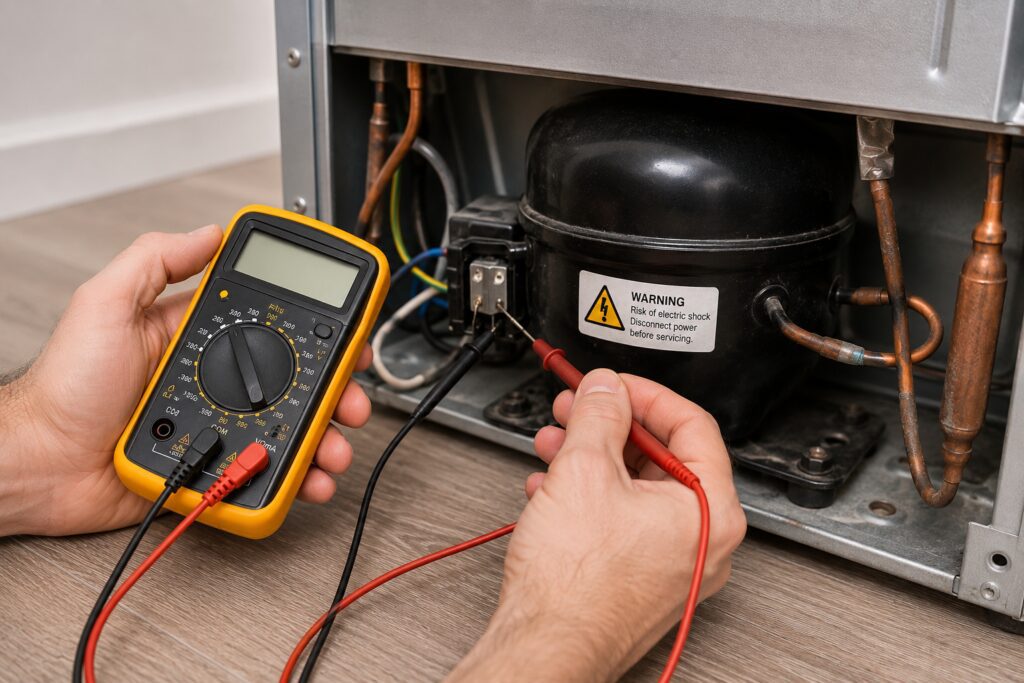 Testing before replacing parts helps distinguish an airflow problem from an electrical or sealed-system failure.
Safe Checks You Can Perform
There are a few checks homeowners can make without touching the compressor or opening the refrigeration system:
- ●Check the controls. Confirm cooling is on and the set temperature was not changed accidentally.
- ●Clear interior air vents. Move food packages away from vents and avoid overpacking shelves.
- ●Inspect door sealing. Look for dirt, tears, gaps, or a door that does not sit evenly.
- ●Listen for the pattern. Clicking, humming, repeated restart attempts, silence from a fan, or unusual vibration can help narrow the problem.
- ●Check for frost or water. Ice behind the rear panel, condensation, or pooling water may indicate airflow, defrost, or drainage trouble.
When to Stop Troubleshooting
Stop DIY troubleshooting if the compressor is repeatedly clicking, the appliance is unusually hot around the mechanical area, electrical odors are present, the breaker trips, or cooling continues to decline. Compressor circuits, fans, controls, and sealed systems involve electrical and refrigeration hazards.
Why Viking Refrigerators Need Specialized Diagnosis
Not every Viking refrigerator uses the same compressor, fan layout, control strategy, or cabinet design. Depending on the product family, the system may use one or two compressors, variable-speed control, independent refrigeration zones, and different service access points.
That is why a hot compressor should not automatically be diagnosed as a failed compressor. The cause may be restricted airflow, a dead fan, a start-control problem, hidden frost, a sensor issue, or an installation problem. Specialized testing protects the appliance and reduces the risk of unnecessary parts replacement.
Why Choose Prime Fix for Viking Refrigerator Repair?
Prime Fix provides careful diagnostics for premium refrigeration in San Francisco, Marin, the Peninsula, the East Bay, the South Bay, and surrounding Bay Area communities. The goal is to identify why the compressor is overheating or running excessively—not simply replace the most expensive component first.
If your Viking refrigerator is warm while the compressor is hot, Prime Fix can evaluate condenser airflow, fans, electrical starting components, temperature controls, defrost operation, and the sealed refrigeration system.
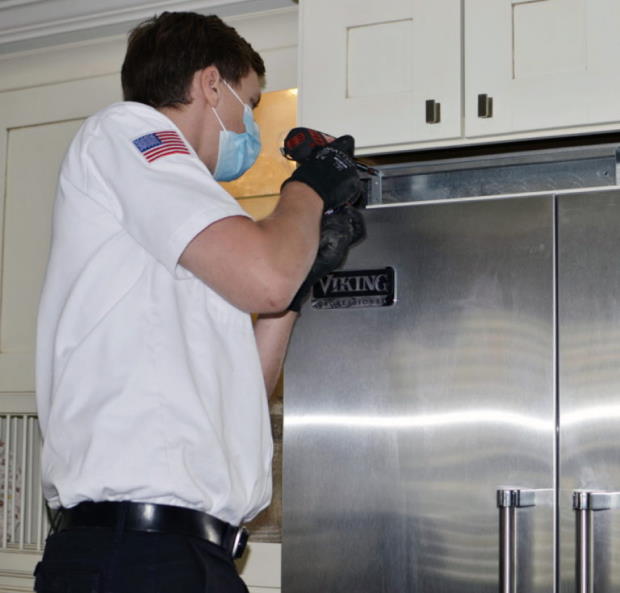 The right repair restores stable temperatures without forcing the compressor to work harder than necessary.
Final Thought: Heat Is a Symptom, Not a Diagnosis
A compressor can be hot because it is working normally under a temporary load. It can also be hot because the condenser cannot release heat, a fan has failed, the compressor cannot start correctly, airflow is blocked, or the sealed system is no longer producing adequate cooling.
Check only the safe basics: controls, interior vents, door sealing, frost, and unusual sounds. If cooling does not return—or the compressor continues clicking, overheating, or running without results—contact Prime Fix for professional Viking refrigerator repair in San Francisco and the Bay Area.