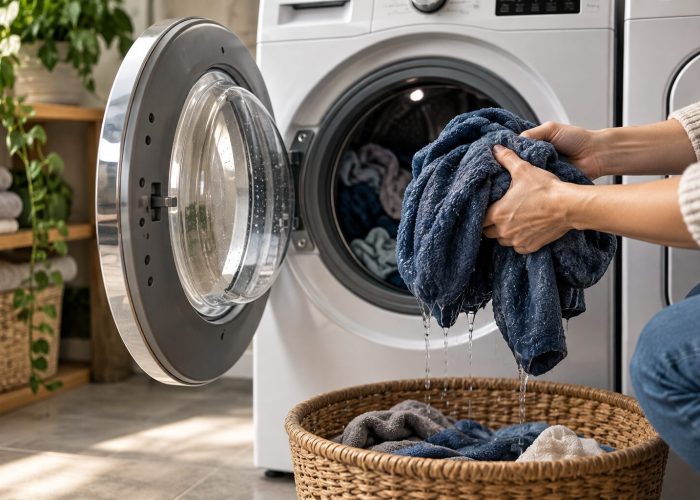
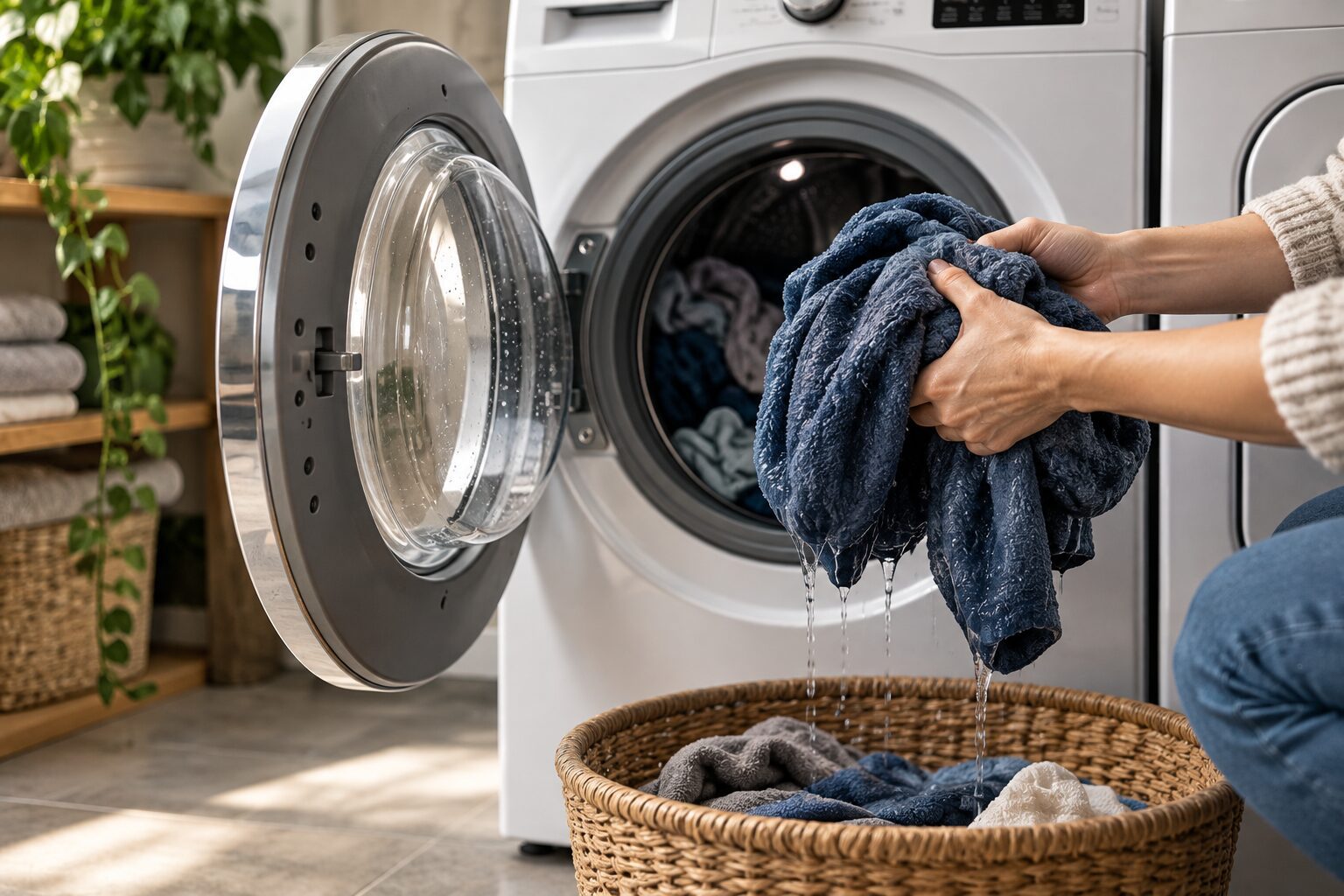
The washer finishes its cycle. The display says “Done.” You open the door expecting damp clothes ready for the dryer — but instead, they are heavy, dripping, or much wetter than usual.
When clothes come out soaking wet, the problem often isn’t with the washing portion of the cycle. Something may have prevented the washer from draining properly, reaching full spin speed, or completing the final spin as intended.
Sometimes the cause is simple, such as an unbalanced load. Other times, unusually wet clothes can be an early sign of a drain pump, spin system, sensor, or control problem. Here are the most common causes and what homeowners in San Francisco and the Bay Area can safely check before scheduling washer service.
1. The Load May Have Become Unbalanced
One of the simplest explanations is an unbalanced load. During the final spin, the washer needs to distribute clothing evenly inside the drum. If heavy items collect on one side, the machine may reduce the spin speed or repeatedly attempt to rebalance the load.
This is especially common with:
- ●Towels
- ●Blankets
- ●Bath mats
- ●Heavy sweatshirts
- ●Bedding
- ●A single large or absorbent item
2. The Washer May Not Be Draining Completely
Before a washer can spin clothes effectively, it needs to remove most of the water from the tub. If draining is slow or incomplete, the washer may reach the end of the cycle while too much water remains.
You may notice:
- ●Clothes are unusually heavy and wet
- ●Water remains visible in the drum
- ●The drain pump runs longer than usual
- ●The cycle takes longer to finish
- ●The washer pauses repeatedly before spinning
- ●A drain or pump-related error appears occasionally
A drainage problem does not always mean the washer will be full of water. Even partial drainage can interfere with the final spin and leave clothes significantly wetter than normal.
3. The Drain Filter or Drain Path May Be Restricted
Depending on the washer design, lint, coins, small objects, fabric debris, or other material can interfere with the drain system.
A partially restricted drain path can be particularly confusing because the washer may still drain — just not quickly enough. The machine might eventually finish the cycle without appearing completely broken.
4. The Drain Hose Could Be Causing the Problem
The drain hose carries water from the washer to the household drain. If it becomes kinked, compressed, improperly positioned, or restricted, water may leave the washer more slowly than it should.
Check the accessible portion of the hose for:
- ●A sharp bend or kink
- ●The washer pressing against the hose
- ●Visible damage
- ●An unusual change in hose position
If the washer was recently moved, installed, or pushed farther back toward the wall, checking the hose is especially worthwhile.
5. The Drain Pump May Be Getting Weak
A drain pump does not always fail all at once. It may continue working while becoming less effective at moving water out of the washer.
Possible clues include:
- ●Draining takes noticeably longer
- ●The pump sounds different
- ●You hear humming without normal water movement
- ●The problem happens more frequently over time
- ●The washer struggles before entering the final spin
A technician can determine whether the issue is a blockage, pump failure, electrical problem, or something elsewhere in the drain system.
6. The Washer May Not Be Reaching Full Spin Speed
Sometimes the washer drains correctly, but the drum never reaches the speed needed to extract enough water from the clothes.
This can make the washer appear almost normal. It washes. It rinses. It drains. The cycle finishes. But the final spin is weaker than it should be.
Depending on the washer design, this may involve the drive system, motor, belt, clutch, or other components responsible for drum movement. A noticeable change in spin sound or speed can be an important clue.
7. Too Much Detergent Can Interfere With the Cycle
More detergent does not necessarily mean cleaner clothes. Using too much — particularly in a high-efficiency washer — can create excessive suds.
Possible signs of oversudsing include:
- ●Excessive foam
- ●Longer-than-normal cycles
- ●Repeated rinsing
- ●Clothes feeling slippery or soapy
- ●Clothes remaining unusually wet
8. The Washer May Be Detecting a Door or Lid Problem
Washers use safety systems to confirm that the door or lid is properly secured before certain parts of the cycle — particularly high-speed spinning.
Watch for:
- ●Difficulty locking the door
- ●Repeated clicking near the latch
- ●The washer pausing before spin
- ●Intermittent door or lid errors
- ●The door behaving differently than it used to
Door-lock and lid-lock safety components should be repaired rather than bypassed.
9. A Sensor May Be Giving Incorrect Information
Modern washers rely on sensors to determine water level, load conditions, balance, drum movement, and other operating information.
If the washer receives incorrect information, it may alter the cycle even though there is no obvious mechanical blockage. For example, the machine may fail to transition correctly from draining to high-speed spinning.
Sensor-related problems can also be intermittent. If the washer behaves normally sometimes but repeatedly leaves clothes soaking wet without an obvious pattern, professional diagnostics may be needed.
10. A Control Issue Can Interrupt the Final Spin
The electronic control system manages the sequence of filling, washing, draining, rinsing, and spinning. If there is a control-related problem, the washer may skip, shorten, or incorrectly manage part of the final spin process.
This is not necessarily the first thing to suspect. Load balance, drainage, detergent use, and accessible restrictions should usually be considered first. But when those factors have been ruled out, the control system may need to be tested.
Wet Clothes After a Wash Cycle: What to Look For
| What You Notice | Possible Cause | First Step |
|---|---|---|
| Only blankets or towels stay very wet | Unbalanced load | Redistribute the load and use an appropriate spin cycle |
| Water remains in the drum | Drainage problem | Check accessible filter and drain hose |
| Washer drains very slowly | Restriction or weak drain pump | Inspect accessible drain components |
| Washer drains but clothes stay saturated | Reduced or missing final spin | Observe whether the drum reaches high spin speed |
| Cycle becomes unusually long | Drain, balance, or excess-suds issue | Check load, detergent, and drainage |
| Excessive foam remains | Too much or incorrect detergent | Verify detergent type and amount |
| Washer pauses before spinning | Balance, lock, sensor, or drain issue | Note when the pause occurs |
| Normal loads repeatedly stay wet | Mechanical, sensor, or control issue | Schedule professional diagnostics |
What Can You Safely Check Yourself?
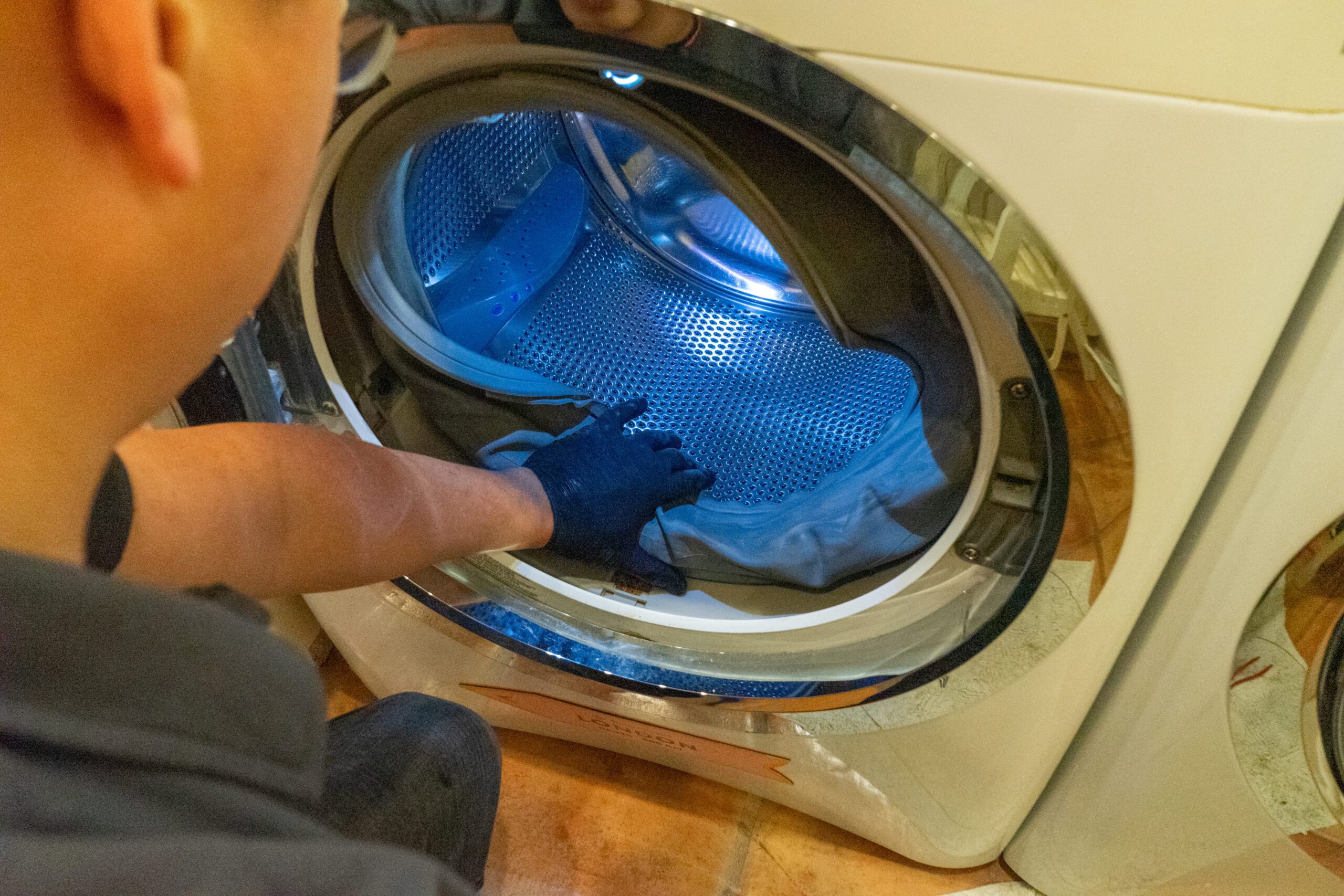
Before scheduling a repair, a few basic checks may help narrow down the cause:
- ●Redistribute an unbalanced load
- ●Try a drain-and-spin or spin-only cycle if your washer provides one
- ●Check whether water remains inside the drum
- ●Inspect the accessible drain hose for kinks
- ●Check a user-accessible drain filter according to the manufacturer’s instructions
- ●Make sure you are using the correct detergent and amount
- ●Listen for unusual pump, motor, or spinning noises
- ●Note any error codes shown on the display
Is It the Washer — or Just the Load?
One unusually wet load does not automatically mean the washer needs repair. A bulky blanket or a few heavy towels can create a balance problem that prevents an effective final spin.
The more important question is whether the problem has become a pattern. If ordinary loads that previously came out properly spun are now consistently soaking wet, something has changed.
When Should You Call a Professional?
Consider professional washer diagnostics if:
- ●Clothes regularly come out soaking wet
- ●Water remains in the washer after the cycle
- ●Drainage has become noticeably slower
- ●The washer no longer reaches a normal high-speed spin
- ●The drain pump sounds unusual
- ●The washer repeatedly stops or pauses before spinning
- ●Error codes keep returning
- ●The problem occurs even with normal, balanced loads
- ●An extra spin cycle has become necessary after most washes
Why You Shouldn’t Ignore Consistently Wet Clothes
Running an extra spin cycle once in a while is not unusual. Having to do it after almost every load is different.
If the washer is not draining or spinning correctly, the underlying problem may become more noticeable over time. It also means your dryer has to remove much more water from each load, which can significantly increase drying time.
So if laundry suddenly takes longer from washer to dryer, the dryer may not be the appliance causing the delay. The problem may have started one step earlier.
Washer Finishes the Cycle but Clothes Are Still Soaking Wet?
Prime Fix provides professional washer diagnostics, maintenance, and repair throughout San Francisco and the Bay Area. We can evaluate drainage, pump performance, spin operation, door or lid locks, sensors, drive components, and controls to identify why your washer is leaving too much water in your laundry.
Need Washer Service in San Francisco or the Bay Area?
If your washer finishes the cycle but clothes are consistently coming out soaking wet, Prime Fix can help determine why.
Prime Fix provides professional washer diagnostics, maintenance, and repair throughout San Francisco and the Bay Area.
“Cycle complete” does not always mean the washer completed every part of the cycle correctly. If soaking-wet clothes are becoming a regular problem, it may be time to have the machine checked.