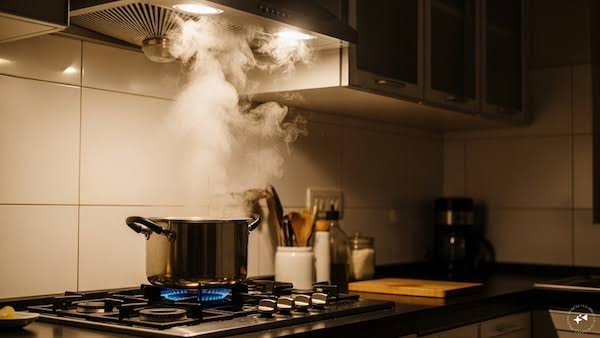
As summer winds down and more meals move back indoors, your kitchen ventilation system is about to get a lot more use. If your range hood seems louder than usual, struggles to clear cooking odors, or leaves smoke hanging in the kitchen, now is a good time to find out why.
A range hood that still turns on is not necessarily working efficiently. Reduced airflow can develop gradually, making the problem easy to overlook until you start cooking more frequently.
For homeowners in San Francisco and the Bay Area, checking your kitchen ventilation system before the busy fall and holiday cooking season can help catch simple maintenance issues — or identify a mechanical problem that needs professional attention.
Why Is My Range Hood Not Removing Smoke and Odors?
A properly operating range hood should capture smoke, steam, grease, and cooking odors and move them away from the cooking area.
When performance begins to decline, several things may be responsible:
- ●Dirty or clogged grease filters
- ●Saturated charcoal filters
- ●Restricted airflow
- ●Grease buildup inside the hood
- ●A weak or failing blower motor
- ●Damaged or obstructed ductwork
- ●Incorrect fan operation
- ●Electronic or control problems
The first step is determining whether the problem is related to routine maintenance or the ventilation system itself.
1. Check the Grease Filters
Grease filters are one of the first places to look when a range hood loses suction.
As you cook, airborne grease is captured by the filters before it can enter the ventilation system. Over time, that grease builds up and restricts airflow. You may notice:
- ●Smoke taking longer to clear
- ●Cooking odors lingering in the kitchen
- ●Reduced suction even at higher fan speeds
- ●Filters that look visibly greasy
2. Does Your Hood Use a Charcoal Filter?
Not every range hood vents outdoors. Some recirculating systems pull air through grease filters and then through activated charcoal filters before returning the air to the kitchen.
Unlike many metal grease filters, charcoal filters generally need periodic replacement rather than washing. When they become saturated, cooking odors may remain even though the fan appears to be operating normally.
If your hood is recirculating and odor removal has noticeably declined, check the manufacturer’s recommended charcoal-filter replacement schedule.
3. Look for Restricted Airflow
A clean filter does not guarantee that air is moving properly through the entire system. For ducted range hoods, airflow can sometimes be restricted farther along the ventilation path.
Possible causes include:
- ●Grease accumulation
- ●A damaged or partially blocked duct
- ●A stuck exterior vent flap
- ●Improper duct installation
- ●Obstructions within the ventilation path
4. The Blower May Be Losing Performance
The blower is responsible for moving air through the range hood. If its motor or related components begin to fail, the hood may still turn on but produce noticeably weaker suction.
Warning signs can include:
- ●Weak airflow at every speed
- ●Fan speed not changing correctly
- ●Humming or buzzing
- ●Rattling or vibration
- ●Intermittent operation
- ●Fan stopping unexpectedly
A sudden change in airflow or sound deserves attention, especially if the filters are already clean.
5. Grease Buildup May Be Inside the Hood
The filters capture a large portion of airborne grease, but they do not necessarily capture everything.
Over time, residue can accumulate on accessible surfaces around the filter area and, depending on the design and maintenance history, elsewhere within the ventilation system. Excessive grease buildup can affect airflow and contribute to unpleasant odors.
6. Are You Using the Right Fan Speed?
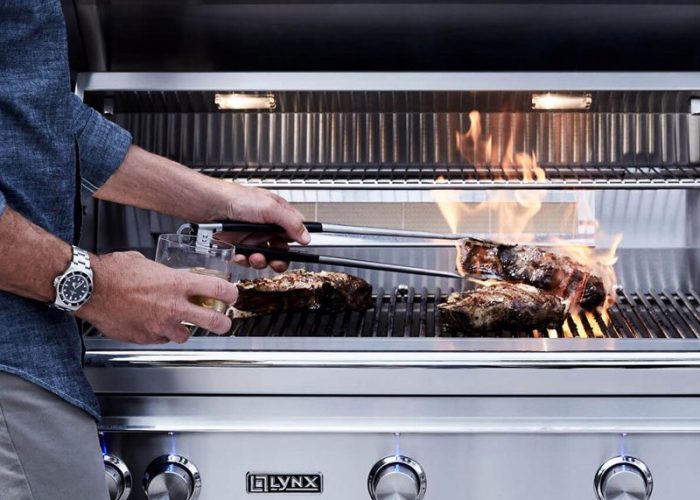
Sometimes poor ventilation is not caused by a failed component. Low fan speeds may be sufficient for light cooking but not for frying, searing, grilling, or other cooking methods that generate substantial smoke, steam, and grease.
It can also help to turn the hood on shortly before cooking and allow it to continue running for several minutes afterward.
However, if the hood previously handled the same cooking routine without difficulty and now struggles even at higher settings, the change in performance should be investigated.
Common Range Hood Problems at a Glance
| What You Notice | Possible Cause | First Step |
|---|---|---|
| Weak suction | Dirty filter or restricted airflow | Inspect the filters |
| Odors remain after cooking | Saturated charcoal filter or poor airflow | Check filter type and condition |
| Hood is unusually loud | Obstruction, blower issue, or vibration | Check accessible filters and listen for unusual sounds |
| Fan runs but barely moves air | Airflow restriction or blower problem | Schedule diagnostics if filters are clean |
| Fan speed does not change | Motor or control issue | Professional inspection |
| Grease collecting around the hood | Filters need maintenance or airflow is reduced | Clean accessible areas and inspect filters |
What Can You Safely Check Yourself?
Before scheduling service, homeowners can perform several simple checks:
- ●Inspect the grease filters
- ●Clean washable filters according to manufacturer instructions
- ●Check whether a charcoal filter is due for replacement
- ●Clean accessible exterior surfaces
- ●Make sure nothing is visibly blocking the hood intake
- ●Test each fan speed
- ●Listen for new rattling, buzzing, or grinding sounds
- ●Check whether smoke and steam are actually being captured during cooking
Avoid disassembling the blower, electrical components, or internal duct connections unless the manufacturer specifically identifies the procedure as homeowner maintenance.
When Is It Time to Call a Professional?
Professional diagnostics are recommended when routine filter cleaning or replacement does not restore normal performance. Consider scheduling service if:
- ●Suction remains weak with clean filters
- ●The blower makes unusual noises
- ●One or more fan speeds stop working
- ●The hood turns on and off unexpectedly
- ●Smoke consistently escapes into the kitchen
- ●Cooking odors linger much longer than they used to
- ●You suspect a duct or airflow problem
- ●The controls or lighting behave abnormally
A technician can determine whether the problem originates in the blower, motor, controls, electrical components, ventilation path, or another part of the system.
For premium kitchen ventilation systems, proper diagnosis is especially important because reduced performance may have more than one contributing cause.
Why Check Your Range Hood Before Fall?
Range hoods often receive heavier use once cooler weather arrives and households begin cooking indoors more frequently.
Fall also leads directly into the holiday season, when ovens, ranges, cooktops, and ventilation systems may operate for longer periods and handle heavier cooking loads.
Checking your range hood now gives you time to clean filters, replace maintenance items, or address developing problems before you actually need the ventilation system working at full capacity.
Is Your Range Hood Losing Suction?
Prime Fix provides professional diagnostics, maintenance, and repair for premium kitchen appliances and ventilation systems throughout San Francisco and the Bay Area. If your range hood has weak suction, unusual noises, inconsistent fan operation, or no longer clears smoke and odors effectively, our technicians can help identify the underlying cause.
Need Range Hood Repair in San Francisco or the Bay Area?
Prime Fix provides professional diagnostics, maintenance, and repair for premium kitchen appliances and ventilation systems throughout San Francisco and the Bay Area.
If your range hood has weak suction, unusual noises, inconsistent fan operation, or simply does not clear smoke and cooking odors as effectively as it used to, professional diagnostics can help identify the underlying cause.
A range hood does not have to stop working completely to need attention. If its performance has noticeably changed, addressing the problem before the busy cooking season can help keep your kitchen comfortable, clean, and properly ventilated.