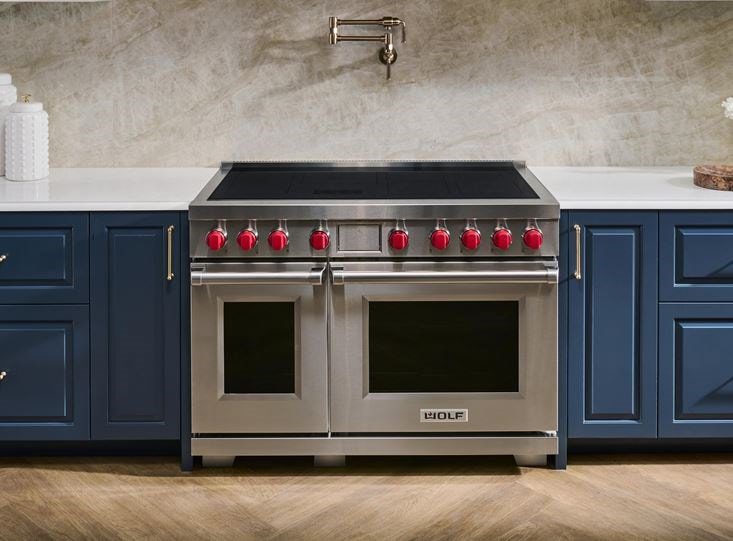
A Wolf gas range is built for exceptional cooking performance and long-term reliability. But even premium appliances can occasionally develop ignition problems over time.
If one of your burners suddenly won’t ignite, don’t assume the worst. In many cases, the cause is minor and easy to identify. However, some issues require professional diagnosis to prevent further damage and ensure safe operation.
The way the burner behaves can offer useful clues. A burner that clicks without producing a flame may have a different problem from one that does not click at all.
Why Won’t My Wolf Gas Burner Ignite?
There are several reasons why a Wolf burner may stop lighting. Some involve basic cleaning or correct burner assembly, while others involve the ignition system, gas delivery, or electronic controls.
Some of the most common causes include:
- ●Food debris or grease blocking the burner ports
- ●A dirty or wet igniter
- ●A burner cap that is not seated correctly
- ●Interrupted gas supply
- ●A faulty electronic ignition system
Common Causes at a Glance
| Possible Cause | What You May Notice | What It May Mean |
|---|---|---|
| Blocked Burner Ports | Clicking, delayed ignition, uneven or weak flame. | Food or grease may be restricting the gas openings. |
| Wet or Dirty Igniter | Clicking continues after cleaning or spills. | Moisture or residue may interfere with the spark. |
| Misaligned Burner Cap | The burner clicks but lights slowly or unevenly. | Gas and spark are not meeting in the correct position. |
| Ignition Component Failure | No spark, weak spark, or intermittent ignition. | The electrode, switch, wiring, or spark module may be faulty. |
| Gas Supply or Valve Problem | Spark is present, but no flame appears. | Gas may not be reaching the burner correctly. |
| Control Board Problem | Intermittent operation or multiple ignition symptoms. | The range may not be controlling ignition correctly. |
1. Food Debris or Grease Is Blocking the Burner
Spills, grease, and food particles can collect around the burner ports and prevent gas from flowing evenly. The igniter may continue clicking, but the flame may appear late, burn unevenly, or fail to appear at all.
This is especially common after heavy cooking, boil-overs, or cleaning products have been used around the burner assembly.
2. The Igniter Is Wet or Dirty
Moisture around the igniter can interfere with the electrical spark. This often happens after cleaning, a boil-over, or a spill near the burner.
If the igniter is clean but still damp, the burner may click repeatedly until the area dries. Grease or residue on the electrode can also weaken the spark or redirect it away from the burner.
3. The Burner Cap Is Not Seated Correctly
A burner cap may shift during cleaning or reassembly. Even a small alignment issue can prevent the flame from forming correctly because the gas flow and ignition spark are no longer meeting in the proper location.
The burner cap should sit flat and evenly in its intended position. If it rocks, appears tilted, or does not match the surrounding burner assembly, reposition it only after the range is cool.
4. The Spark Ignition System Has Failed
If the burner does not click, produces a weak spark, or works only intermittently, the problem may involve the igniter electrode, burner switch, wiring, spark module, or electronic control.
Because several components can produce similar symptoms, replacing parts without testing the ignition circuit can lead to an expensive misdiagnosis.
5. Gas Is Not Reaching the Burner Correctly
If the igniter sparks but no flame appears, the issue may involve the gas supply, burner passage, regulator, or gas valve. If several burners are affected, the problem may extend beyond a single burner assembly.
Gas-delivery components should be inspected by a qualified technician. Do not attempt to disassemble a valve, regulator, gas line, or internal burner component.
What Can You Check Before Scheduling Service?
Before calling for service, there are a few simple checks you can perform without opening the range or touching gas and electrical components.
- ●
Check the burner cap. Make sure it is positioned correctly after cleaning. - ●
Inspect the burner ports. Look for visible food residue or grease. - ●
Allow the igniter to dry. Moisture after cleaning can temporarily affect ignition. - ●
Test another burner. This may help determine whether the issue affects one burner or the entire range. - ●
Listen to the ignition pattern. Notice whether the burner clicks normally, intermittently, or not at all.
In many cases, cleaning the burner assembly or repositioning the burner cap is enough to restore normal operation. If the problem continues, avoid repeated ignition attempts and schedule a professional inspection.
Wolf burner clicking but not lighting?
If cleaning, drying, and correct burner-cap placement do not restore ignition, Prime Fix can diagnose spark components, controls, gas delivery, and burner operation throughout San Francisco and the Bay Area.
When Is It More Than a Simple Cleaning Issue?
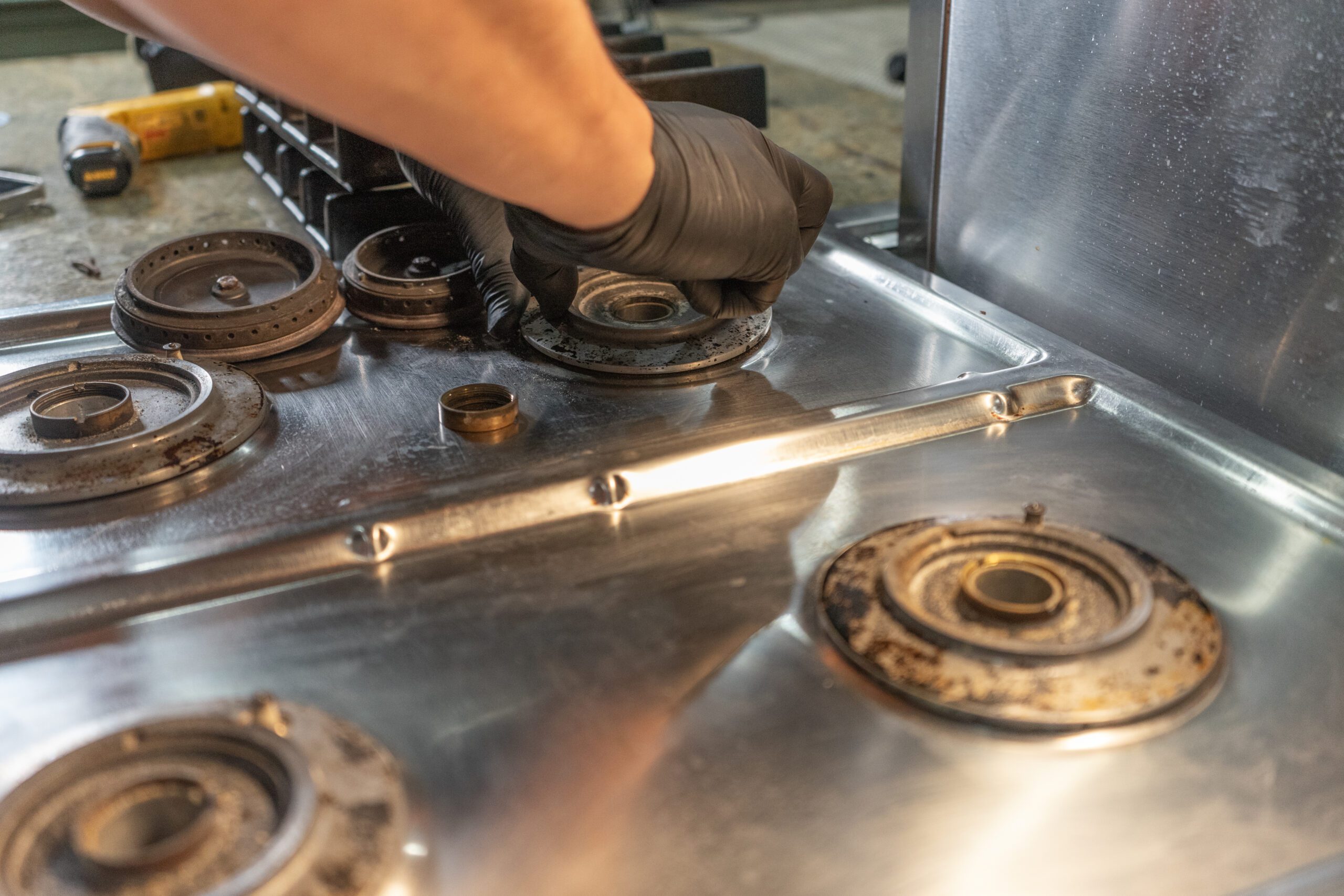
If the burner still will not ignite after basic cleaning and inspection, the problem may involve internal components.
Common repair issues include:
- ●A failed spark ignition module
- ●A worn or damaged igniter electrode
- ●A faulty gas valve or interrupted gas delivery
- ●An electronic control board malfunction
These components should be inspected by an experienced technician, especially when working on a premium gas appliance like a Wolf range.
Why You Shouldn’t Ignore the Problem
Even if the other burners are working properly, continuing to use the range with one malfunctioning burner is not ideal.
A faulty ignition system may place additional strain on related components. Delayed ignition, repeated clicking, or unstable flame can also indicate a problem that should be corrected before normal use continues.
Because the appliance uses gas and electricity, safety should always come first. Addressing the issue early can often prevent a more expensive repair later.
When Should You Call a Professional?
If your Wolf gas burner will not ignite, keeps clicking without lighting, produces delayed ignition, or works only intermittently, it is time to schedule a professional inspection.
An experienced technician can identify whether the cause is contamination, misalignment, a failed ignition component, interrupted gas flow, wiring, or an electronic control problem.
If you are located in San Francisco or elsewhere in the Bay Area, timely service can help prevent further issues and keep your kitchen operating safely.
Why Choose Prime Fix for Wolf Gas Range Repair?
Prime Fix provides professional diagnostics and repair for Wolf appliances throughout San Francisco, Marin, the Peninsula, the East Bay, the South Bay, and surrounding Bay Area communities.
Whether your burner will not ignite, the ignition system keeps clicking, or your range needs expert diagnostics, our technicians can identify the source of the problem and recommend the appropriate repair.
Final Thought: Ignition Symptoms Help Point to the Cause
A Wolf burner that will not ignite does not always need a major repair. Sometimes the cause is moisture, food residue, or a burner cap that is not seated correctly.
If the burner still fails to light after the safe basic checks—or if you notice repeated clicking, delayed ignition, unstable flame, or a gas odor—stop using the affected burner and contact Prime Fix for professional Wolf gas range repair in San Francisco and the Bay Area.