A Wolf oven is designed to deliver precise temperature control, consistent cooking performance, and the reliability homeowners expect from a premium kitchen appliance.
But what happens when your oven suddenly starts taking much longer to preheat?
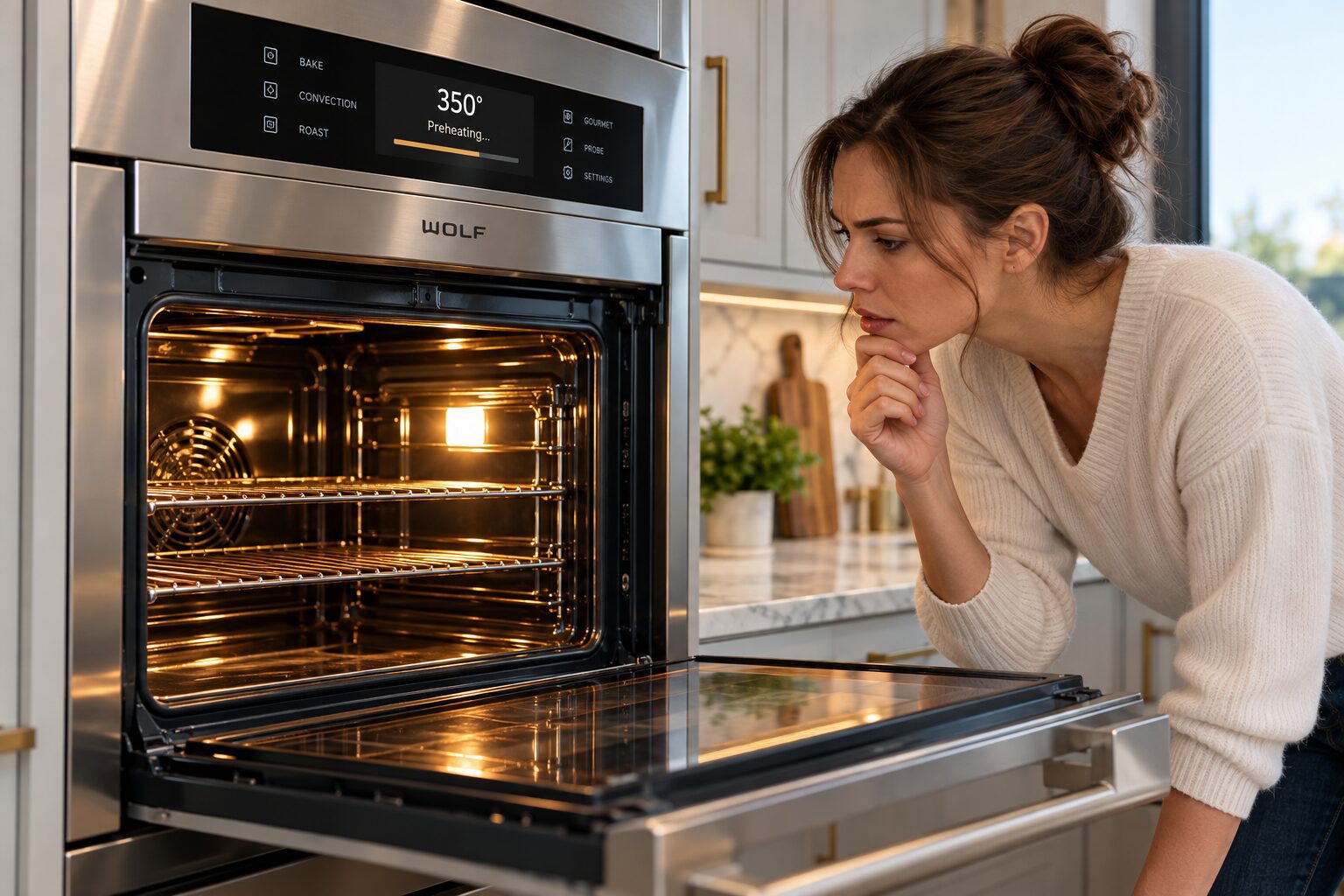
Maybe it used to reach 350°F without much waiting, but now you’re standing in the kitchen wondering why the preheat indicator is still on. Perhaps your oven eventually reaches the selected temperature, but dinner takes longer to prepare. Or maybe it never seems to get hot enough at all.
A Wolf oven that takes longer than expected to preheat doesn’t necessarily have a serious mechanical problem. However, a noticeable change in preheating performance can indicate an issue worth investigating.
The cause may be as simple as the selected cooking mode, oven settings, or heat escaping through the door. In other cases, slow preheating may be related to heating elements, temperature sensors, electrical supply, or other internal components.
For homeowners in San Francisco and the Bay Area, understanding what affects preheating time can help distinguish normal oven behavior from signs that professional Wolf oven diagnostics may be needed.
How Long Should a Wolf Oven Take to Preheat?
There is no single preheating time that applies to every Wolf oven.
The time required to reach a selected temperature depends on several factors, including the model, oven size, cooking mode, starting temperature, and target temperature.
A larger oven cavity generally requires more energy to heat than a smaller one. Higher temperature settings also take longer to reach.
The selected cooking mode matters, too. Conventional Bake, Convection Bake, Roast, and other functions may use different combinations of heating elements and fans.
For this reason, comparing the preheating time of two different Wolf ovens may not provide an accurate indication of whether either appliance is working properly.
What’s More Important Than the Exact Number of Minutes?
Pay attention to whether your oven’s behavior has changed.
- ● The oven consistently takes much longer to preheat than it did previously.
- ● Preheating seems unusually slow even at familiar temperature settings.
- ● The oven remains in preheat mode for an extended period.
- ● Food takes longer to cook despite using the same recipes and settings.
- ● The oven struggles to reach higher temperatures.
- ● Preheating performance varies significantly between cooking modes.
- ● An error message or unusual indicator appears.
1. Some Wolf Ovens Naturally Take Longer to Preheat
Before assuming something is broken, it’s important to understand how Wolf ovens are engineered.
Unlike some conventional ovens with exposed heating elements, certain Wolf electric ovens feature a concealed bake element beneath the oven floor.
This design creates a smooth interior and helps distribute heat throughout the oven cavity. However, heating the entire cavity may take longer than expected, particularly if you’re comparing the appliance with a different brand or an older oven.
Oven Size and Design
A larger oven has more interior space to heat. A full-size wall oven and a smaller specialty oven should not be expected to behave identically.
Even among Wolf models, differences in heating-element placement, insulation, and airflow systems can influence preheating performance.
Hidden Heating Elements
On certain electric models, the bake element is positioned beneath the oven floor rather than exposed inside the cavity.
This can contribute to a longer initial heating period while allowing the oven to distribute heat through its interior surfaces.
Different Convection Systems
Wolf’s M Series ovens and certain newer range models use advanced convection systems designed to distribute heat efficiently.
For example, the Dual VertiCross convection system uses high-speed fans and a specialized heating-element arrangement. These fans can operate during preheat even when conventional Bake mode is selected.
2. Electrical Supply Can Make a Significant Difference
One of the less obvious reasons a Wolf electric oven may preheat slowly is the electrical supply available at the installation.
Many homeowners assume that if an oven turns on, its power supply must be correct. However, an appliance can operate while receiving a different supply voltage than expected.
The Difference Between 208V and 240V
Wolf explains that some Dual Fuel Ranges and Wall Ovens operating on a 208-volt supply can take approximately 25–40% longer to preheat than they would on a 240-volt supply.
Once the oven reaches its target temperature, cooking performance can be comparable.
This distinction can be especially relevant in certain multifamily buildings or properties with different electrical service configurations.
A longer preheat time related to the building’s normal electrical supply is not necessarily evidence of a defective oven.
When Should You Suspect an Electrical Problem?
- ● The oven began preheating more slowly without changes to its installation.
- ● Heating performance became inconsistent after electrical work.
- ● The oven displays unusual errors or behaves unpredictably.
- ● Certain heating functions no longer operate normally.
- ● The appliance struggles to reach temperatures it previously achieved.
3. A Failing Heating Element May Be Slowing Down Preheating
Heating elements generate the heat required to bring an electric oven to the selected temperature.
Depending on the Wolf model and cooking mode, the oven may use multiple heating elements during preheat.
If one element stops working or operates incorrectly, the remaining heating system may not bring the oven up to temperature as efficiently.
What Happens When a Heating Element Fails?
A heating-element problem doesn’t always mean the oven stops heating completely. In some cases, the appliance may still generate heat but take substantially longer to reach the selected temperature.
- ● Preheating takes significantly longer than before.
- ● The oven reaches lower temperatures but struggles with higher settings.
- ● Cooking results are inconsistent.
- ● Certain cooking modes perform differently.
- ● Food takes longer to bake or roast.
- ● The oven never reaches the selected temperature.
Why You May Not See the Problem
On ovens with concealed heating elements, a visual inspection of the oven cavity may not reveal whether an element is functioning correctly.
A heating element can also have an electrical fault that isn’t obvious from its appearance.
Professional diagnosis may involve checking element operation, electrical continuity, and the controls responsible for supplying power.
4. A Convection Fan Problem Can Affect Heating Performance
Convection systems help circulate heated air throughout the oven cavity.
In Wolf ovens, fan operation varies by model and cooking mode. Some models use multiple fans and dedicated convection heating elements to distribute heat.
If a fan isn’t operating as designed, the oven may develop uneven temperatures or experience heating-performance issues.
Signs That May Point to a Fan Problem
- ● Unusually slow or inconsistent heating.
- ● Uneven browning.
- ● Food cooking faster on one side.
- ● Unusual mechanical sounds during operation.
- ● A noticeable change in normal fan noise.
- ● Different results when using convection settings.
If cooking performance has changed along with preheating time, a technician can check whether the relevant fans and heating components are operating correctly.
5. The Oven Temperature Sensor May Be Giving Incorrect Readings
Your Wolf oven uses temperature-monitoring components to regulate heat inside the cavity.
These components help the control system determine when heating is needed and when the selected temperature has been reached.
If a temperature sensor or related control circuit is malfunctioning, the oven may not regulate temperature correctly.
What Symptoms Might Appear?
- ● The oven indicates preheating is complete, but cooking performance suggests otherwise.
- ● Unusually long heating periods.
- ● Inconsistent temperatures.
- ● Undercooked or overcooked food.
- ● Unexpected heating behavior.
- ● Temperature-related fault messages on some models.
Why Oven Temperature Naturally Fluctuates
An oven does not maintain one perfectly fixed air temperature at every moment. Instead, the heating system cycles to maintain the desired cooking conditions.
Oven temperature readings can vary depending on when and where they are measured, recent door openings, and the heating cycle.
An inexpensive oven thermometer may therefore show a different reading from the selected temperature without indicating a defect.
6. The Oven Door May Not Be Closing or Sealing Properly
Even a well-functioning heating system can struggle if heat escapes through the oven door.
A properly closing door helps retain heat inside the cavity during preheating and cooking.
If the door doesn’t close completely or the gasket is damaged, heat loss can affect performance.
Common Door-Related Issues
- ● Worn or damaged door hinges.
- ● A deteriorated oven door gasket.
- ● An obstruction preventing full closure.
- ● Misaligned door components.
- ● A door that doesn’t sit evenly against the oven frame.
- ● Problems following door removal or reinstallation.
Can Opening the Oven Door Affect Preheating?
Yes. Every time the oven door opens, hot air escapes and cooler room air enters.
Repeated door openings during preheat can delay the process.
Before assuming the oven has a heating problem, make sure the door closes completely and avoid opening it unnecessarily during preheat.
7. The Selected Cooking Mode Can Change What You Experience
Wolf ovens offer multiple cooking modes designed for different foods and cooking methods.
Depending on the model, these may include Bake, Convection, Convection Bake, Roast, Convection Roast, Broil, and specialized cooking programs.
These modes do not necessarily use the same heating elements or airflow patterns.
Bake vs. Convection
Traditional Bake mode generally uses heating elements to establish the desired oven temperature.
Convection modes circulate heated air to promote more even heat distribution.
On applicable models, convection cooking may allow foods to cook more efficiently, but that does not mean every convection setting will always preheat faster.
Should You Switch to Convection to Speed Things Up?
Not automatically. If you regularly use Bake mode, switching to Convection simply to compensate for a newly developed heating problem may hide the symptom without addressing its cause.
Convection also changes cooking conditions. Depending on the recipe and Wolf model, cooking-temperature or time adjustments may be recommended.
Use the cooking mode recommended for your recipe and oven model. If a familiar mode suddenly takes significantly longer to preheat, investigate the change.
8. Gas Wolf Ovens Have Different Potential Causes
Not every Wolf oven uses electric heating elements. Wolf gas ranges rely on gas burners and ignition components to generate heat.
If a gas oven takes unusually long to preheat, the cause may differ from that of an electric wall oven.
Possible Gas Oven Issues
- ● Delayed burner ignition.
- ● An igniter that is no longer operating correctly.
- ● Gas-valve problems.
- ● Temperature-control issues.
- ● A burner that does not operate as intended.
- ● Other faults affecting the heating system.
For certain Wolf gas ovens, burner ignition normally occurs within approximately 30–45 seconds, although initial ignition on a new appliance can take longer.
This refers to burner ignition time, not the time needed to preheat the entire oven.
9. A Control Board or Electrical Component May Be Involved
Modern Wolf ovens rely on electronic controls to coordinate heating elements, temperature monitoring, fans, and operating modes.
If an internal control component malfunctions, the oven may fail to heat as intended.
Possible issues can involve:
- ● Heating-element relays.
- ● Electronic control boards.
- ● Internal wiring connections.
- ● Thermal safety components.
- ● Fan-related control circuits.
However, slow preheating alone does not establish that the control board is defective.
A technician should verify the heating system and related components before recommending an expensive electronic replacement.
Wolf Oven Preheating Problems: Symptoms and Possible Causes
| What You Notice | Possible Explanation | Recommended Next Step |
|---|---|---|
| Oven has always preheated slowly | Model design, cavity size, or supply voltage | Check model documentation |
| Preheat suddenly takes longer | Heating element, fan, or control issue | Arrange diagnostics if persistent |
| Oven never reaches temperature | Heating or control-system fault | Schedule professional service |
| Preheat completes, but food cooks slowly | Temperature regulation or cooking-mode issue | Verify settings and recurring symptoms |
| One cooking mode works better | Mode-specific heating component or operation | Compare with manufacturer instructions |
| Oven door won’t close completely | Hinge, gasket, or alignment problem | Check for visible damage |
| Slow heating after electrical work | Supply or connection issue | Have electrical installation checked |
| Gas oven is slow to ignite | Ignition or gas-heating problem | Request qualified service |
| Oven displays an error | Sensor, control, or other system fault | Record the message and request service |
What Can You Safely Check Before Calling a Technician?
If your Wolf oven seems to be taking longer than usual to preheat, a few basic checks can help narrow down the problem.
- ● Confirm the cooking mode. Make sure the selected mode is appropriate for the food you’re preparing.
- ● Check the selected temperature. Verify that the oven is set to the intended temperature and uses the expected units.
- ● Allow preheating to finish. Wait for the oven’s normal preheat-complete indication unless the manufacturer instructs otherwise.
- ● Keep the door closed. Avoid repeatedly opening the door to check whether the oven feels hot.
- ● Check for visible door problems. Look for obvious gasket damage, misalignment, or obstructions without removing components.
- ● Compare with previous performance. Determine whether the oven has always behaved this way or the change is recent.
- ● Note additional symptoms. Record unusual sounds, inconsistent cooking, error messages, or problems limited to a particular mode.
- ● Identify your Wolf model. Model-specific information is important when evaluating expected preheat behavior.
Is It Safe to Keep Using a Wolf Oven That Preheats Slowly?
That depends on the cause.
If your oven has always taken a similar amount of time to preheat and otherwise operates normally, its behavior may be consistent with its design or electrical supply.
But if preheating has recently become much slower, continued use without understanding the cause may not be advisable.
Stop using the oven and seek professional assistance if:
- ● You smell gas.
- ● There is unexplained smoke or a burning electrical odor.
- ● The appliance sparks or shows signs of electrical damage.
- ● A breaker repeatedly trips.
- ● The oven displays a serious fault or stops heating unexpectedly.
- ● The door cannot close safely.
- ● The appliance shows signs of overheating or abnormal operation.
For persistent slow preheating without immediate safety concerns, schedule an inspection rather than repeatedly increasing the temperature to compensate.
Why Slow Preheating Matters Before Holiday Cooking
As Thanksgiving and the winter holiday season approach, homeowners often rely more heavily on their ovens.
Roasting a turkey, preparing side dishes, baking desserts, and coordinating several dishes at once all depend on predictable oven performance.
An oven that takes significantly longer to preheat can disrupt meal preparation.
More importantly, a heating problem may also affect cooking consistency after preheating is complete.
Imagine preparing a large holiday meal and discovering that the oven is struggling to reach the required temperature.
What initially seemed like a minor inconvenience may become a much more stressful problem when several dishes depend on the same appliance.
Why It’s Worth Checking Your Oven Before Thanksgiving
If you’ve noticed a recent change in preheating performance, consider addressing it before your next major cooking occasion.
Early diagnostics can help determine whether the oven is operating normally or requires maintenance or repair.
It’s especially worthwhile if you’ve also noticed uneven cooking, unusually long baking times, or inconsistent temperature performance.
When Should You Schedule Professional Wolf Oven Repair?
A professional inspection is appropriate when the problem continues after you’ve confirmed the settings and normal operating conditions.
- ● Your Wolf oven suddenly takes much longer to preheat than before.
- ● The appliance consistently fails to reach the selected temperature.
- ● Preheat finishes, but the oven doesn’t appear to heat properly.
- ● Food regularly takes significantly longer to cook.
- ● Certain cooking modes no longer work as expected.
- ● You notice unusual fan or mechanical sounds.
- ● The oven displays recurring error messages.
- ● The door is not closing or sealing correctly.
- ● Heating performance has changed following electrical work.
- ● A gas oven has unreliable ignition or heating behavior.
A professional diagnostic assessment can help determine whether the problem involves a heating element, fan, temperature sensor, control component, ignition system, or installation condition.
The goal is to identify the actual cause rather than replace parts based on symptoms alone.
Wolf Oven Diagnostics and Repair in San Francisco & the Bay Area
Wolf ovens are built for precise cooking, but even premium appliances can develop heating and temperature-control problems over time.
If your Wolf oven is taking longer than usual to preheat, struggling to reach the selected temperature, or producing inconsistent cooking results, Prime Fix can help investigate the issue.
Prime Fix provides professional appliance diagnostics, maintenance, and repair throughout San Francisco and the Bay Area, including service for premium kitchen appliances.
Whether the problem involves the oven’s heating system, temperature regulation, convection components, or door operation, identifying the underlying cause is the first step toward restoring dependable performance.
Wolf Oven Taking Too Long to Preheat?
Don’t wait until an important meal to discover that your oven isn’t heating the way it should. Prime Fix provides professional oven diagnostics and repair throughout San Francisco and the Bay Area.
Schedule professional oven diagnostics with Prime Fix.
San Francisco & Bay Area | +1 415-310-0481
Final Thought
A Wolf oven that takes longer to preheat isn’t always malfunctioning. Oven design, heating modes, cavity size, and electrical supply can all influence the time required to reach the selected temperature.
However, when preheating becomes noticeably slower than before, the oven struggles to reach its target temperature, or cooking results change, the issue deserves attention.
The most useful question isn’t simply, “How long should my Wolf oven take to preheat?” It’s “Is my Wolf oven still heating the way it normally does?”
Recognizing that difference can help you avoid unnecessary repairs while addressing genuine heating problems before they become more disruptive.