You open your Miele dishwasher after a completed wash cycle, expecting clean dishes and an empty dishwasher tub. Instead, you notice standing water at the bottom.
Maybe there’s a small puddle beneath the filter. Perhaps the water level is high enough to cover the bottom of the dishwasher. Or your Miele dishwasher displays a drainage-related error and refuses to finish the cycle.
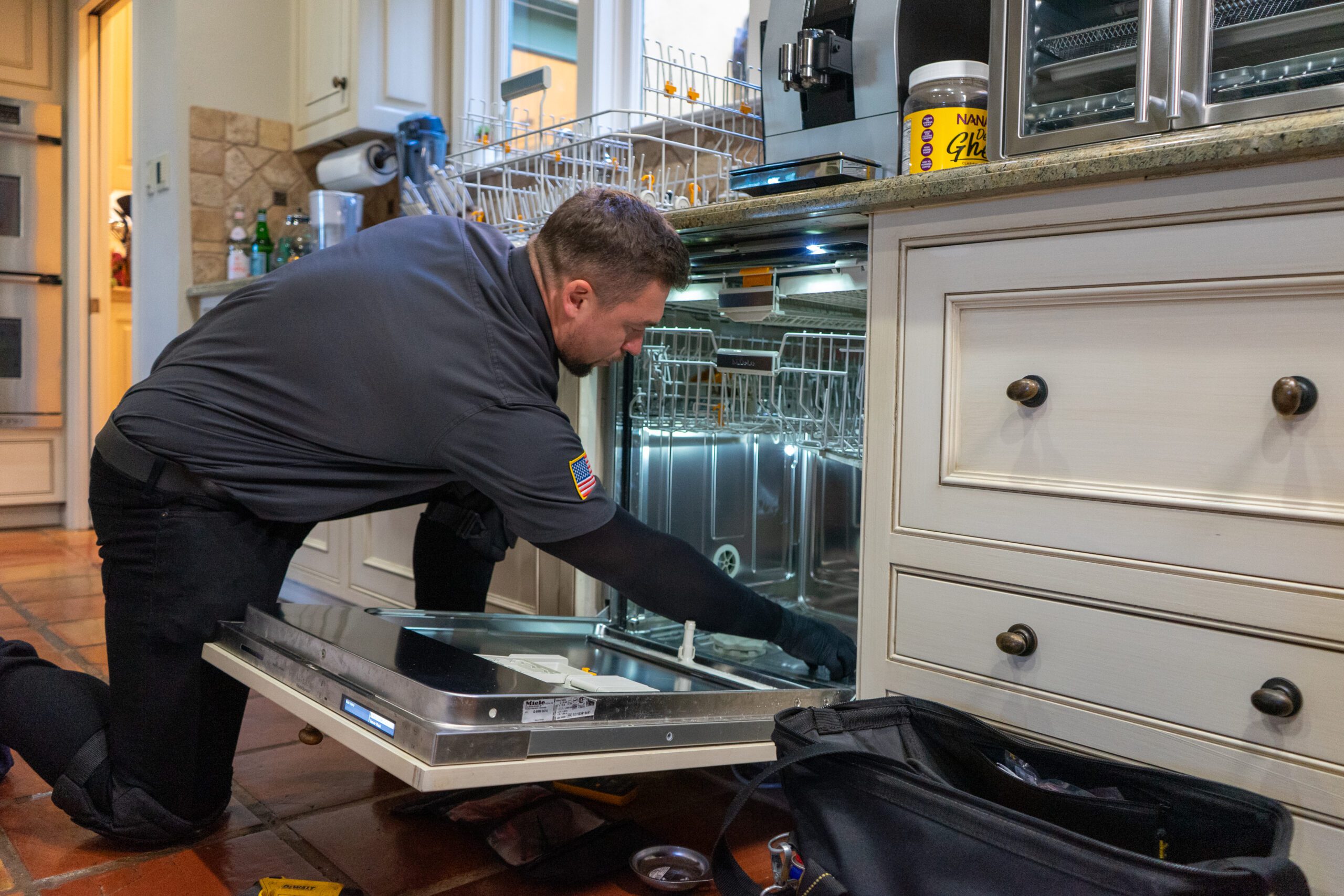
A Miele dishwasher that won’t drain completely doesn’t always have a failed drain pump. In many cases, the problem starts with something much simpler: a clogged filter, food debris near the drain pump, a blocked drain hose, or a restriction in the kitchen’s plumbing.
However, when water repeatedly remains inside the dishwasher, the issue deserves attention. Standing water can lead to unpleasant odors, interfere with future wash cycles, and indicate that the appliance’s drainage system is not operating as intended.
For homeowners in San Francisco and the Bay Area, understanding the possible causes can help determine which checks are safe to perform and when professional Miele dishwasher repair may be necessary.
Is It Normal for a Miele Dishwasher to Have Water at the Bottom?
Before assuming your dishwasher has a drainage problem, it’s important to distinguish between normal residual water and excessive standing water.
A small amount of water may remain in the sump area beneath the filter assembly on certain dishwasher models. This does not necessarily indicate a malfunction.
However, visible standing water covering the bottom of the dishwasher after a completed cycle is not something you should routinely ignore.
Signs of a possible drainage problem include:
- ● Water pooling across the bottom of the dishwasher.
- ● Dirty or cloudy water remaining after the wash cycle.
- ● A drainage error appearing on the display.
- ● The dishwasher stopping before completing its program.
- ● Gurgling or unusual noises during the drain phase.
- ● Water returning after the dishwasher has drained.
- ● Unpleasant odors developing between cycles.
- ● The same drainage problem occurring repeatedly.
1. A Clogged Filter May Be Restricting Water Flow
One of the first components to check is the dishwasher’s filter system.
Miele dishwashers use filters to help prevent food particles and debris from entering the drainage components.
Over time, these filters can accumulate residue, especially when dishes contain food scraps, grease, or other debris.
How a Dirty Filter Affects Drainage
When the filter becomes heavily clogged, water may not move freely toward the sump and drain system.
You might notice that water remains inside the tub or that the dishwasher struggles to complete its normal drainage process.
Other possible symptoms include:
- ● Food residue collecting around the filter.
- ● A greasy film on the filter surfaces.
- ● Unpleasant odors from the dishwasher.
- ● Dirty water remaining after the cycle.
- ● Reduced washing performance.
What You Can Safely Check
Once the dishwasher is switched off and has cooled, inspect the filter assembly according to your model’s operating instructions.
For many Miele models, the filter system can be removed and rinsed under running water.
Use a soft brush if necessary to remove accumulated residue. Avoid damaging the fine filter mesh.
Before reinstalling the filter, inspect the surrounding area for visible food particles or other debris.
When Cleaning the Filter Isn’t Enough
If the filter is clean but the dishwasher still leaves water behind, the restriction may be located farther along the drainage path.
That could include the drain pump, drain hose, or household drain connection.
2. Food Debris or Foreign Objects May Be Blocking the Drain Pump
The drain pump is responsible for moving wastewater out of the dishwasher.
During the drain phase, the pump directs water through the drain hose and toward the household drainage system.
Although the filter helps protect the pump, small objects can sometimes make their way into the sump area.
What Can Block a Miele Dishwasher Drain Pump?
- ● Small pieces of broken glass.
- ● Food particles and hardened residue.
- ● Fruit pits or seeds.
- ● Small plastic fragments.
- ● Labels or packaging material.
- ● Other foreign objects that have entered the dishwasher.
Even a relatively small obstruction may interfere with the pump impeller or prevent water from moving normally.
Signs of a Blocked Drain Pump
- ● Standing water after the cycle.
- ● A humming or buzzing noise during draining.
- ● The dishwasher attempting to drain without removing much water.
- ● An interrupted wash program.
- ● A drainage-related error message.
However, these symptoms do not prove that the pump itself is defective.
A blockage, electrical issue, or restriction elsewhere in the drainage system may produce similar behavior.
Can You Check the Drain Pump Yourself?
Miele provides model-specific instructions for checking and cleaning the drain pump area on certain dishwashers.
Depending on the model, access may involve removing the filter assembly and a pump cover.
Always follow the instructions for your exact appliance.
Never force the pump impeller or dismantle electrical pump components.
3. The Drain Hose May Be Kinked or Clogged
Even when the filter and drain pump are functioning correctly, wastewater still needs a clear path out of the dishwasher.
The drain hose connects the dishwasher’s drainage system to the household plumbing.
If the hose becomes restricted, the pump may be unable to move water out efficiently.
What Causes Drain Hose Blockages?
- ● Grease and detergent residue accumulating inside the hose.
- ● Food particles collecting at bends or connections.
- ● A hose compressed behind the appliance.
- ● A sharp kink restricting water movement.
- ● Incorrect hose routing or installation.
In some cases, the problem appears after a dishwasher has been moved or reinstalled.
For example, a hose may become trapped behind cabinetry, reducing its ability to carry wastewater.
Warning Signs of a Restricted Drain Hose
A blocked or kinked drain hose may cause the dishwasher to drain slowly, leave water in the bottom, or display a drainage error.
You may also notice that the dishwasher seems to pump water for an unusually long time without fully emptying.
What Can You Check?
If the hose is safely visible beneath the kitchen sink, inspect the accessible section for obvious kinks, compression, or damage.
Do not pull a built-in Miele dishwasher out of its cabinet without understanding the electrical, water, and mounting connections.
Avoid forcing a clogged hose or using aggressive drain-cleaning chemicals.
If the hose is damaged, improperly routed, or blocked internally, professional service may be necessary.
4. The Kitchen Sink Drain May Be the Actual Problem
Sometimes the dishwasher is working correctly, but the household plumbing is preventing water from leaving the appliance.
Most residential dishwashers discharge wastewater into a drain connection associated with the kitchen sink.
Depending on the installation, the drain hose may connect to a garbage disposal inlet or a dishwasher branch on the sink’s drain plumbing.
If that connection becomes restricted, wastewater may drain slowly or back up.
How Can You Tell Whether the Problem Is in the Plumbing?
- ● The kitchen sink drains more slowly than usual.
- ● Water backs up into the sink when the dishwasher drains.
- ● Gurgling sounds come from the sink drain.
- ● The garbage disposal or sink drain has recently been serviced.
- ● Water reappears inside the dishwasher after the wash cycle.
A blockage in the sink’s drain connection or trap can interfere with dishwasher drainage.
What About the Garbage Disposal?
If a garbage disposal was recently installed or replaced, its dishwasher inlet may still have the factory knockout plug in place.
This plug must be removed during installation when a dishwasher drain hose is connected to that inlet.
If it remains in place, the dishwasher cannot discharge water through the connection.
Because disposal and drain connections involve electrical equipment and plumbing, have a qualified professional inspect the installation if you’re uncertain.
5. The Non-Return Valve or Drain Pump Cover May Not Be Seated Correctly
This is a particularly important point for Miele dishwashers.
Depending on the model, the drainage system may include a non-return valve or a removable drain pump cover.
These components help the system direct water correctly and protect the pump area.
If a cover or valve is not installed properly after cleaning, the dishwasher may develop drainage problems even when there is no major clog.
Why Does Proper Positioning Matter?
On certain Miele models, a mispositioned non-return valve can allow water to flow back into the dishwasher.
On newer models, an incorrectly seated drain pump cover can interfere with effective pumping.
Signs That May Point to This Problem
- ● Drainage problems begin after the filter or pump area was cleaned.
- ● Water remains even though visible debris has been removed.
- ● The dishwasher appears to pump water but does not empty correctly.
- ● Water returns to the bottom after draining.
- ● A drainage fault continues after routine cleaning.
What Should You Do?
Consult the instructions for your exact Miele model.
If the relevant component is designed for homeowner access, check whether its cover or locking mechanism is properly engaged.
Do not force a component that doesn’t fit. A damaged latch, cover, or valve may require replacement.
6. The Drain Pump Itself May Be Failing
A blocked drain pump and a defective drain pump are not the same problem.
A blockage prevents a potentially functional pump from moving water properly.
A defective pump may be unable to operate even when the drainage path is clear.
How Does a Drain Pump Fail?
- ● A damaged impeller.
- ● Mechanical wear.
- ● A seized pump mechanism.
- ● An electrical fault in the pump motor.
- ● A damaged electrical connection.
- ● Intermittent pump operation.
How Can You Recognize a Possible Pump Failure?
- ● The dishwasher makes no normal draining sound.
- ● A humming noise occurs without effective water removal.
- ● Drainage works intermittently.
- ● Water remains after every cycle.
- ● The dishwasher displays recurring drainage errors.
- ● Cleaning the filter and accessible pump area makes no difference.
These symptoms are not enough to confirm pump failure.
A blocked hose, control problem, or improperly installed pump cover can produce similar results.
Why Professional Diagnosis Matters
Replacing a drain pump without confirming the cause may not solve the problem.
A technician can inspect the drainage path, evaluate pump operation, and determine whether the pump is receiving the appropriate electrical supply.
The objective is to identify the faulty component rather than replace parts based on assumptions.
7. What Does Miele Dishwasher Error F11 Mean?
Some Miele dishwashers display an F11 fault code when the appliance detects a water-drainage problem.
The code may appear along with standing water in the dishwasher or an interrupted wash program.
According to Miele’s troubleshooting information, possible causes include a blocked drain pump, an improperly positioned non-return valve or pump cover, and other drainage restrictions.
Does F11 Always Mean the Drain Pump Is Broken?
No. An F11 error indicates a drainage problem, but it does not identify one defective component with certainty.
For example, the problem may involve:
- ● A clogged filter.
- ● A foreign object blocking the pump.
- ● An incorrectly positioned drain pump cover.
- ● A non-return valve problem.
- ● A restricted drain hose.
- ● A blocked household drain.
- ● A defective drain pump.
Does Every Miele Dishwasher Display F11?
Not necessarily.
Error messages, indicators, and troubleshooting procedures vary by model and generation.
Some dishwashers display a drainage warning or flashing indicator instead.
Always consult the operating instructions for your specific appliance before interpreting a fault code.
8. Why Water May Return After the Dishwasher Has Drained
Sometimes the dishwasher appears to empty normally, but water collects at the bottom again later.
This can be particularly confusing because the appliance may seem to have completed its cycle successfully.
The timing of the returning water provides an important clue.
Possible Cause: Backflow Through the Drainage System
If the non-return valve is not functioning correctly or is improperly seated, wastewater may flow back toward the dishwasher.
A plumbing restriction or incorrect drain-hose installation may also contribute to drainage problems.
Possible Cause: Household Plumbing Backup
If the sink drain is blocked, wastewater may have difficulty moving away from the dishwasher connection.
Under some plumbing conditions, water may return through the drain hose.
What Should You Observe?
Note whether water is present immediately after the cycle or appears several hours later.
Also check whether using the kitchen sink seems to affect the water level inside the dishwasher.
These observations can help distinguish a drainage failure during the wash program from water entering the appliance afterward.
Miele Dishwasher Not Draining: Symptoms and Possible Causes
| What You Notice | Possible Cause | Recommended Next Step |
|---|---|---|
| Water remains after every cycle | Clogged filter or restricted drainage | Check and clean the filter |
| Dishwasher hums but doesn’t drain | Blocked pump, hose restriction, or pump fault | Inspect accessible areas safely |
| F11 appears on the display | Water-drainage fault | Follow model-specific Miele guidance |
| Water returns after draining | Non-return valve or plumbing backflow | Check timing and request diagnostics |
| Problem began after cleaning | Pump cover or valve incorrectly seated | Verify correct reinstallation |
| Sink drains slowly too | Household plumbing blockage | Have sink drainage checked |
| Dishwasher makes grinding noises | Foreign object near the pump | Stop use and follow manual instructions |
| Drain hose is visibly kinked | Restricted wastewater flow | Check accessible hose routing |
| Filter cleaning doesn’t help | Deeper blockage or component failure | Schedule professional service |
These symptoms are clues rather than definitive diagnoses.
What Can You Safely Check Before Calling a Technician?
If your Miele dishwasher isn’t draining completely, begin with a few basic checks.
Step 1: Turn Off the Dishwasher
Switch off the appliance before inspecting the filter. If you need to access the pump area, disconnect electrical power as directed in the model-specific instructions. Allow hot water to cool before handling it.
Step 2: Check the Amount of Standing Water
Determine whether water is confined to the recessed sump area or visibly covering the dishwasher floor. If water is excessive, carefully remove it with a small container or sponge before accessing components.
Step 3: Inspect and Clean the Filter
Remove the filter assembly according to the operating manual. Rinse away food debris and residue, then reinstall it securely.
Step 4: Check for Visible Foreign Objects
Look for debris in accessible areas around the filter. Be cautious of broken glass or other sharp materials. Do not blindly reach into the pump housing.
Step 5: Check the Drain Pump Cover or Non-Return Valve
If your model allows homeowner access, verify that the relevant component is correctly seated and locked. Miele uses different designs across its dishwasher ranges, so follow the correct instructions.
Step 6: Inspect the Accessible Drain Hose
Look for visible kinks or compression beneath the sink. Avoid pulling or moving the built-in dishwasher unnecessarily.
Step 7: Check the Kitchen Sink
If the sink is also draining slowly, the issue may involve the household plumbing rather than the dishwasher alone.
Step 8: Record Any Error Messages
Write down the exact message or fault code. Also note whether the dishwasher stops during washing, rinsing, or draining.
Step 9: Test Only After Reassembly
Once all accessible components have been correctly reinstalled, follow the manufacturer’s instructions for checking drainage. If the fault returns, stop repeating wash cycles and arrange diagnostics.
Can Standing Water Damage a Miele Dishwasher?
Standing water doesn’t automatically mean permanent damage has occurred. However, leaving a persistent drainage problem unresolved can create additional issues.
Unpleasant Odors
Dirty water and trapped food residue may develop unpleasant smells over time.
Poor Washing Results
If wastewater is not removed properly, the dishwasher may not complete its normal cleaning and rinsing process.
Interrupted Programs
Some drainage faults can prevent the appliance from completing a wash cycle.
Potential Leaks or Water Damage
If the drainage problem is accompanied by backflow, incorrect connections, or leakage, nearby cabinetry and flooring may be at risk.
For built-in dishwashers installed in premium kitchens, detecting water-related problems early is especially important.
Repeated Stress on Components
A pump that repeatedly attempts to operate against a blockage may be exposed to additional stress.
The exact consequences depend on the nature of the fault and the appliance’s protective controls.
When Should You Stop Using the Dishwasher?
Stop using the appliance and arrange professional assistance if:
- ● Water leaks onto the floor or into surrounding cabinetry.
- ● The dishwasher repeatedly displays a drainage error.
- ● The pump makes loud grinding or abnormal mechanical noises.
- ● The appliance repeatedly attempts to drain without success.
- ● You notice a burning smell or electrical warning signs.
- ● Water continues returning after the cycle.
- ● The pump cover or another component appears damaged.
- ● The dishwasher does not drain after the recommended basic checks.
If there is a suspected electrical fault or water leak near electrical connections, disconnect power only if it is safe to do so.
If the appliance’s leak-protection system has activated, follow the manufacturer’s instructions and do not attempt to bypass it.
Why Drainage Problems Matter More During Busy Holiday Cooking
As Thanksgiving and the winter holiday season approach, kitchens often see heavier use.
Large family dinners, baking, food preparation, and entertaining can mean more dishes and more dishwasher cycles.
A dishwasher that occasionally leaves water behind may become a much bigger inconvenience when the kitchen is busy.
Instead of finishing the cleanup, you may be left with dirty water in the appliance and dishes that need to be washed again.
Addressing a recurring drainage problem before holiday gatherings can help avoid unexpected interruptions.
If your Miele dishwasher has recently begun draining slowly or showing fault messages, it may be worth scheduling an inspection before your next major gathering.
When Is Professional Miele Dishwasher Repair Necessary?
Routine filter cleaning is part of normal dishwasher maintenance. However, not every drainage issue can be solved by cleaning the filter.
Professional diagnostics may be needed when:
- ● The dishwasher continues leaving standing water after basic cleaning.
- ● An F11 or other drainage fault repeatedly appears.
- ● The drain pump does not operate normally.
- ● A blockage is located inside an inaccessible hose or component.
- ● Water flows back into the dishwasher.
- ● The pump cover, non-return valve, or other components are damaged.
- ● The problem may involve electrical controls or wiring.
- ● The dishwasher has a suspected leak.
- ● The drainage problem returns shortly after cleaning.
A qualified technician can evaluate the pump, drainage connections, relevant valves, and other components to determine what is preventing normal operation.
This approach helps avoid unnecessary part replacements and focuses on correcting the underlying issue.
Miele Dishwasher Diagnostics and Repair in San Francisco & the Bay Area
Miele dishwashers are designed for reliable cleaning performance, but their drainage systems can still experience blockages, wear, and mechanical faults.
If your Miele dishwasher won’t drain completely, repeatedly leaves water in the bottom, or displays a drainage-related error, Prime Fix can help investigate the problem.
Prime Fix provides professional appliance diagnostics, maintenance, and repair throughout San Francisco and the Bay Area, including service for premium kitchen appliances.
Whether the cause is a blocked drain pump, a restricted hose, a valve issue, or another component, identifying the underlying problem is the first step toward restoring dependable dishwasher performance.
Miele Dishwasher Not Draining Properly?
Don’t wait until standing water becomes a recurring kitchen problem. Prime Fix provides professional dishwasher diagnostics and repair throughout San Francisco and the Bay Area.
Schedule professional dishwasher diagnostics with Prime Fix.
San Francisco & Bay Area | +1 415-310-0481
Final Thought
A Miele dishwasher that won’t drain completely doesn’t always need a new pump.
A clogged filter, foreign object, restricted drain hose, incorrectly positioned pump cover, or household plumbing problem may be responsible.
The most important thing is to determine whether water is failing to leave the dishwasher or returning after it has already drained.
If basic maintenance doesn’t resolve the problem, professional diagnostics can help identify the cause before unnecessary repairs or further complications occur.