A new Wolf induction range can completely change the way a kitchen looks and cooks. But before the range arrives, there is an important question to answer: Is the kitchen actually ready for it?
Induction ranges have specific requirements for electrical service, installation space, clearances, and ventilation planning. With a premium appliance, discovering a problem on installation day can mean delays, additional electrical work, cabinet modifications, or a second service visit.
If you are planning a Wolf induction range installation in San Francisco or the Bay Area, these are four things worth confirming before delivery.
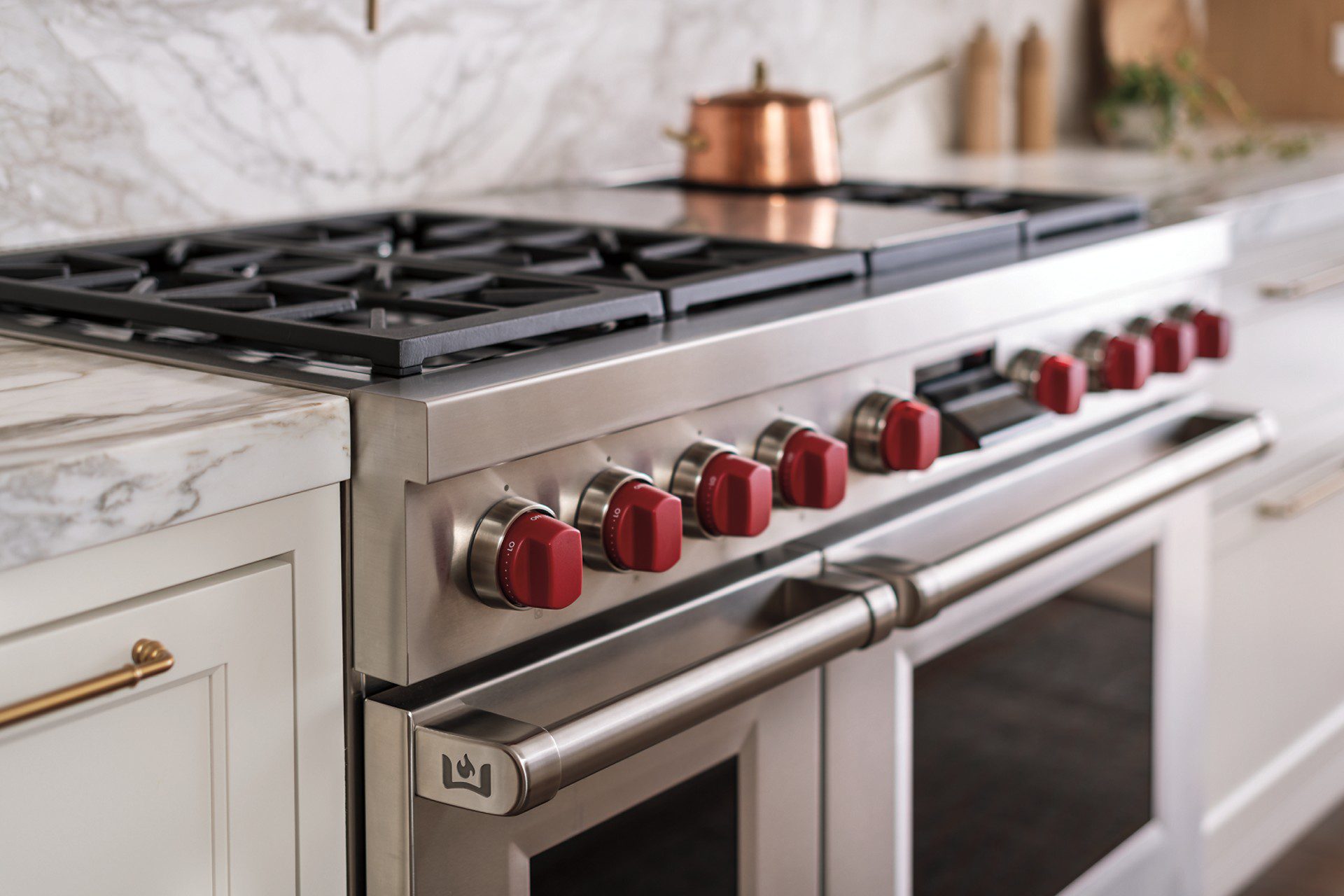
1. Make Sure the Electrical Supply Is Ready
This should be one of the first things checked — not something discovered after the range is already sitting in the kitchen.
Wolf induction ranges have substantial electrical requirements. Current U.S. models require a grounded 240 VAC, 60 Hz dedicated electrical supply, while the exact circuit requirements depend on the model. The current 48-inch induction range requires two separate electrical circuits.
Before installation, confirm:
- ●The exact Wolf model being installed
- ●Required voltage and amperage
- ●Whether the appliance requires one or two dedicated circuits
- ●The location of the electrical supply
- ●Whether the existing wiring and connection meet current requirements
- ●Whether electrical work must be completed before delivery
Replacing an Older Range?
This is particularly important during appliance replacement. An opening that looks correct does not guarantee that the electrical setup behind the old range matches the new appliance.
Even when replacing an older Wolf induction range with a current model of the same nominal width, dimensions and other installation details can differ. Always review the installation specifications for the exact new model rather than assuming it will be a direct replacement.
2. Measure More Than Just the Width
It is easy to think: “It’s a 36-inch range, and I have a 36-inch opening. It should fit.” But width is only one part of the installation.
You also need to consider range depth, height, surrounding cabinetry, countertop relationship, door clearance, and the location of utilities behind the appliance. Wolf publishes model-specific installation dimensions and required clearances, so measurements should always be compared with the specifications for the exact model being installed.
Before delivery, check:
- ●Opening width
- ●Opening height
- ●Range depth
- ●Countertop height
- ●Adjacent cabinet clearances
- ●Space required when the oven door is open
- ●Electrical connection location
- ●Whether trim, backsplash, or cabinetry could interfere with installation
Why This Matters in Bay Area Kitchens
San Francisco kitchens are not always built around modern standard appliance dimensions. Older homes may have custom cabinetry, remodeled openings, uneven floors, unusual countertops, or spaces that were modified for a previous range.
Even relatively small differences can matter with a heavy, built-in-looking premium appliance. This is why measuring only the visible opening is not enough. The entire installation area should be evaluated against the specifications for the exact model.
3. Check Clearance and Ventilation Before the Range Arrives
Induction does not create combustion gases like a gas range, but cooking still produces heat, steam, grease, smoke, and odors.
Wolf recommends ventilation above its cooking appliances, while specific requirements can depend on the installation and applicable local codes. Required clearances to surrounding and combustible materials must also be followed according to the specifications for the exact model.
Before installation, check:
- ●Existing hood dimensions
- ●Hood position relative to the range
- ●Clearance above the cooking surface
- ●Cabinetry surrounding the range
- ●Ducting, if a ducted hood is being used
- ●Local ventilation requirements
- ●Whether the existing ventilation setup is appropriate for the new appliance
Don’t Assume Induction Means Ventilation Doesn’t Matter
Induction eliminates the open flame and combustion associated with gas cooking, but it does not eliminate everything produced by cooking.
Searing meat, frying food, boiling large pots, and high-temperature cooking can still generate steam, grease, smoke, and odors. Good ventilation remains an important part of a comfortable kitchen.
4. Make Sure the Range Can Be Installed and Secured Correctly
A range is a large, heavy appliance, and proper installation involves more than sliding it into an opening.
Wolf induction ranges include an anti-tip system as part of the installation. The appliance also needs to sit correctly in relation to the floor, cabinets, countertop, and electrical connections.
Before installation, consider:
- ●Is the floor level and finished?
- ●Is the opening clear of obstructions?
- ●Can the anti-tip system be installed correctly?
- ●Are electrical connections positioned so they will not interfere with the range?
- ●Is there enough space to position and level the appliance?
- ●Can the range be moved into the kitchen safely?
Don’t Forget the Delivery Path
A range can fit perfectly into its final opening but still be difficult to get there. This can be especially important in San Francisco homes, condos, and older buildings where access may be much tighter than the kitchen itself.
Measure or review:
- ●Exterior and interior doors
- ●Hallways and tight corners
- ●Stairways
- ●Elevator dimensions
- ●Kitchen islands and other fixed cabinetry
Wolf Induction Range Pre-Installation Checklist
| Check Before Installation | Why It Matters |
|---|---|
| Confirm exact model number | Electrical, dimension, and clearance requirements vary by model |
| Verify electrical service | Induction ranges require substantial dedicated electrical capacity |
| Check electrical location | Incorrect placement can interfere with installation |
| Measure width, height, and depth | Nominal range width alone is not enough |
| Check countertop and cabinetry | Helps prevent fit and clearance problems |
| Review ventilation setup | Helps manage smoke, steam, grease, and odors |
| Confirm required clearances | Important for proper and safe installation |
| Plan anti-tip installation | Important safety consideration |
| Check floor and leveling | Helps the range sit and operate correctly |
| Measure the delivery path | Prevents surprises when the appliance arrives |
Replacing an Existing Wolf Range? Don’t Assume It’s a Direct Swap
Replacing an older Wolf induction range with a newer model may look straightforward, particularly when both appliances have the same nominal width. But there can still be differences in depth, electrical requirements, clearances, and other installation details.
Before ordering a replacement, compare the installation specifications for both the existing and new model. That simple step can reveal whether electrical work, cabinetry adjustments, or other preparation will be needed before installation day.
Should You Prepare the Kitchen Before Delivery?
Yes. Ideally, the installation area should be completely ready before the new range arrives.
That means the correct electrical service is available, dimensions and clearances have been verified, cabinetry is complete, the floor is ready, ventilation has been considered, and the delivery route has been checked.
Planning a Wolf Induction Range Installation?
Prime Fix provides professional appliance installation services throughout San Francisco and the Bay Area. Proper planning can help identify electrical, fit, clearance, leveling, and installation issues before they turn into delays on installation day.
Professional Wolf Induction Range Installation in San Francisco & the Bay Area
Installing a Wolf induction range is not simply a matter of moving the appliance into place and turning it on. The electrical supply, installation opening, clearances, leveling, anti-tip system, and surrounding kitchen all need to work together.
Prime Fix provides professional appliance installation services throughout San Francisco and the Bay Area. Before installation, the setup can be evaluated to identify potential issues that could delay or complicate the job.
If you are replacing an existing range or preparing a remodeled kitchen for a new Wolf induction range, checking these details before delivery can make the installation much smoother. The best installation day is the one where there are no surprises.