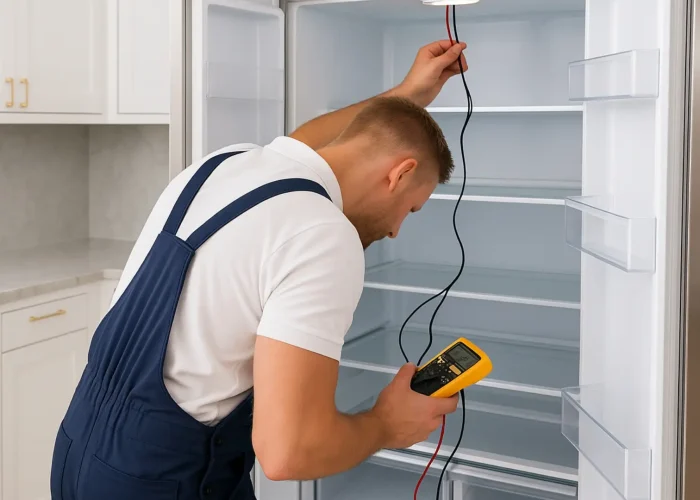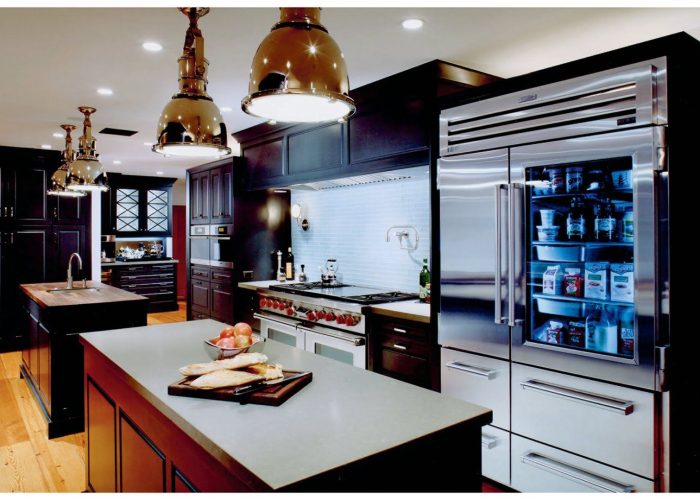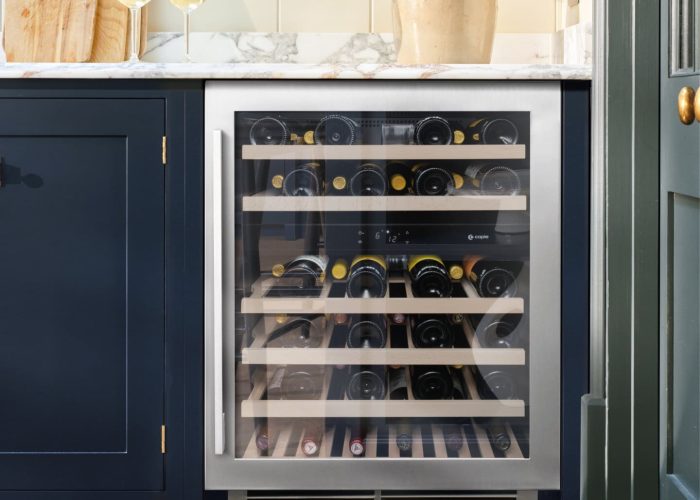
A built-in refrigerator is designed to disappear into the architecture of the kitchen while quietly doing one of the most important jobs in the home. It protects food, supports entertaining, and keeps a premium kitchen running without drawing attention to itself.
When a built-in refrigerator is not cooling properly, however, the problem is rarely something to ignore. The cabinet may feel only slightly warm at first. Drinks may take longer to chill. Produce may spoil sooner. The compressor may seem to run constantly, or the refrigerator section may warm up while the freezer appears normal.
Premium built-in units require a more careful approach than standard freestanding refrigerators. Their ventilation, control systems, refrigeration design, custom panels, installation clearances, and service access are often different. That is why random part replacement or one-size-fits-all troubleshooting can make the situation worse instead of solving it.
In San Francisco and throughout the Bay Area, these refrigerators also deal with coastal moisture, fine dust, remodel debris, tight custom cabinetry, frequent entertaining, and older homes with complex electrical histories. A premium refrigerator may look flawless from the outside while struggling behind the grille or interior panels.
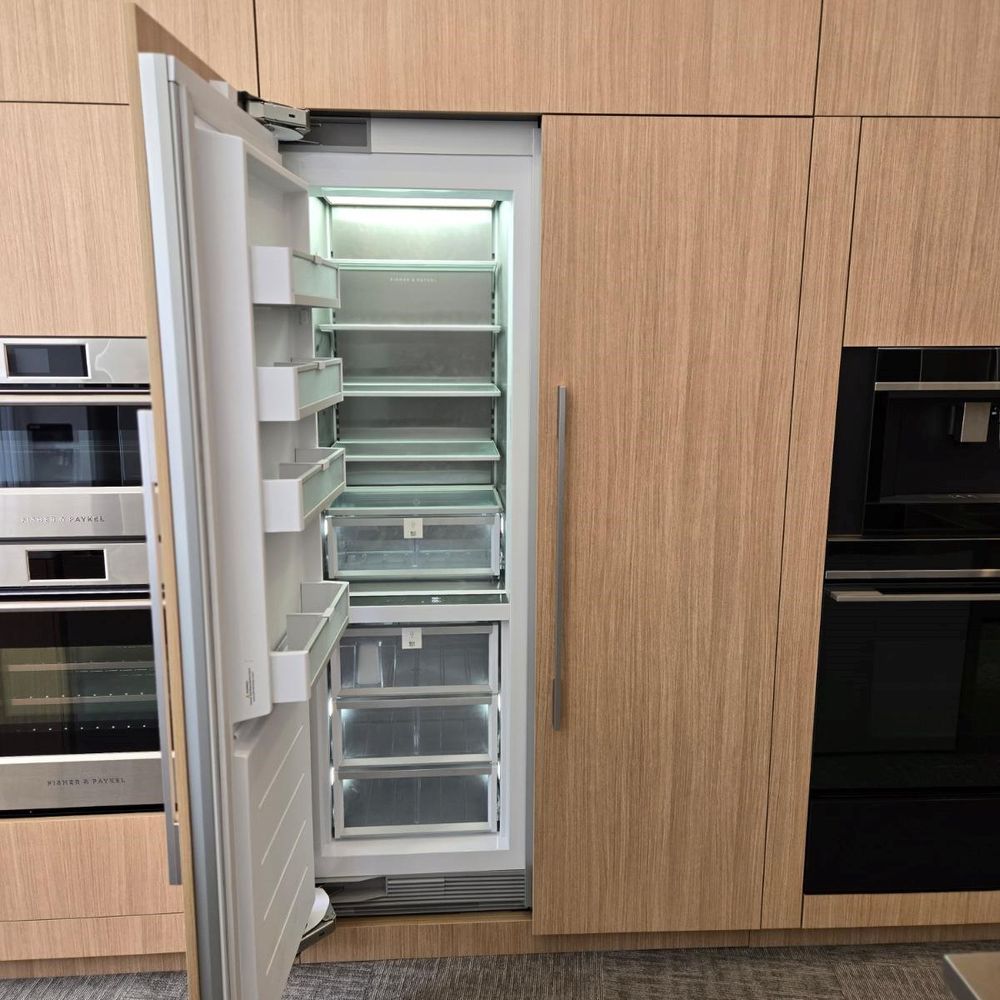
Why Premium Built-In Refrigerators Are Different
A premium built-in refrigerator is not simply a freestanding unit placed inside cabinetry. It is engineered as part of the kitchen. The appliance may use top-mounted mechanical components, dual refrigeration sections, multiple fans, electronic dampers, precision sensors, custom door panels, advanced control boards, and tightly managed ventilation paths.
That integration creates a seamless look, but it also means the refrigerator must be diagnosed as a complete system. Cooling performance depends not only on the compressor and refrigerant circuit, but also on cabinet airflow, door alignment, condenser condition, sensor readings, fan operation, defrost performance, and the way the unit was installed.
Common Cooling Problems at a Glance
| Possible Cause | What You May Notice | Why Specialized Diagnosis Matters |
|---|---|---|
| Restricted Condenser Airflow | Constant running, warm cabinet, slow cooling, louder operation. | Access and airflow paths vary by built-in design and installation. |
| Evaporator Fan Failure | Freezer cold but refrigerator warm, weak airflow, unusual fan noise. | Multiple fans and control signals may need to be tested together. |
| Defrost System Problem | Frost buildup, blocked airflow, temperature swings, water issues. | The heater, sensor, drain, fan, and control may all be involved. |
| Door Seal or Alignment Issue | Condensation, frost, warm zones, door not closing with a firm seal. | Custom panels and hinges can change door geometry and sealing. |
| Sensor or Control Fault | Incorrect readings, irregular cycling, display temperature not matching reality. | Electronic faults can mimic mechanical refrigeration problems. |
| Sealed-System Issue | Weak cooling in both sections, long run times, unusual compressor behavior. | Requires refrigeration tools, system testing, and correct repair procedures. |
1. Dirty Condenser or Restricted Ventilation
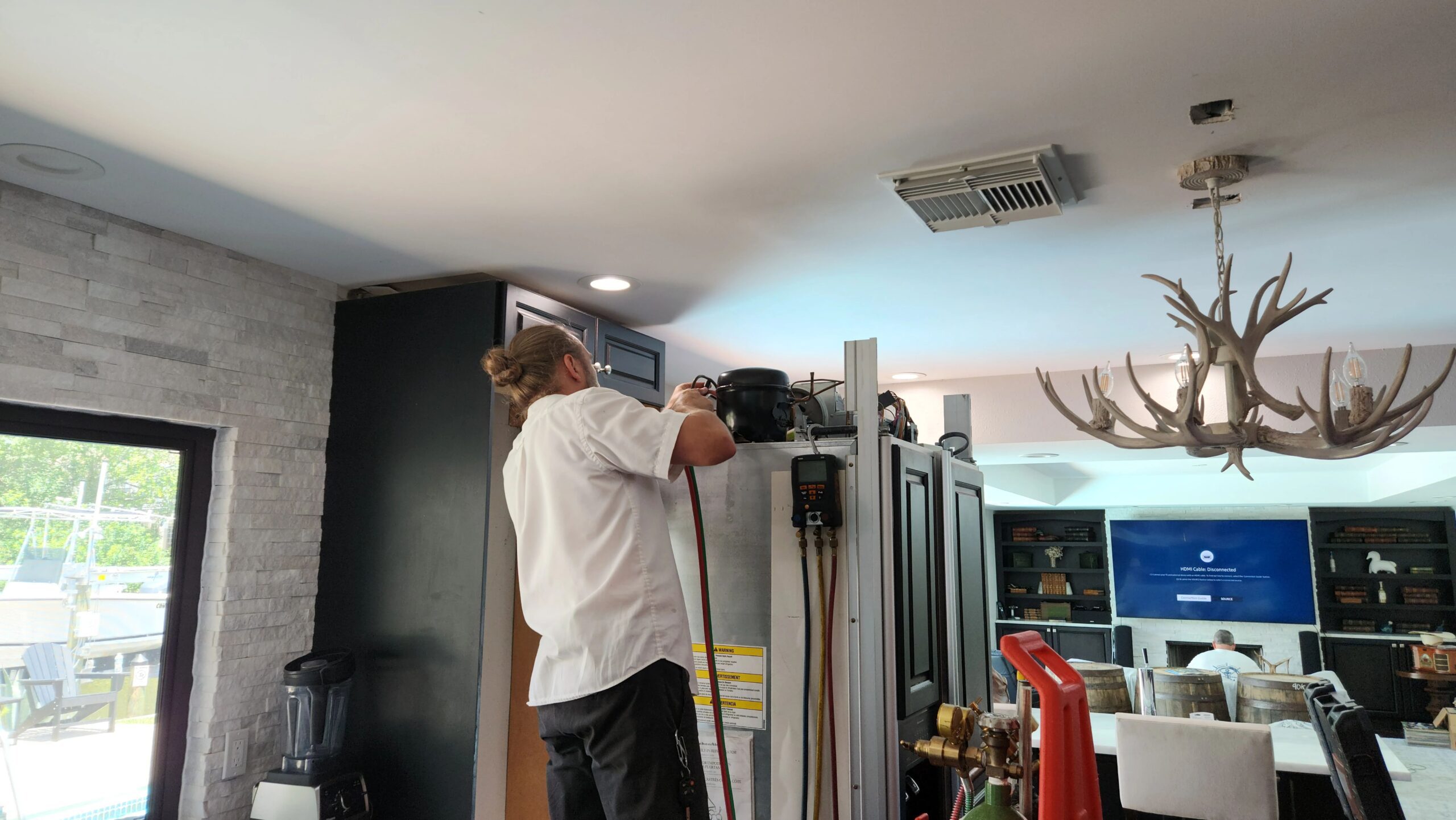
Every refrigerator must release heat. On many built-in models, the condenser and mechanical area are located behind an upper grille or another dedicated service section. If the condenser is coated with dust, pet hair, kitchen residue, or remodel debris, heat cannot escape efficiently.
Restricted ventilation can create the same effect. If cabinetry, decorative trim, insulation, or stored items interfere with the designed airflow path, the refrigerator may run continuously and still remain too warm. Over time, the extra workload can place unnecessary strain on fans and the compressor.
2. Evaporator Fan or Internal Airflow Failure
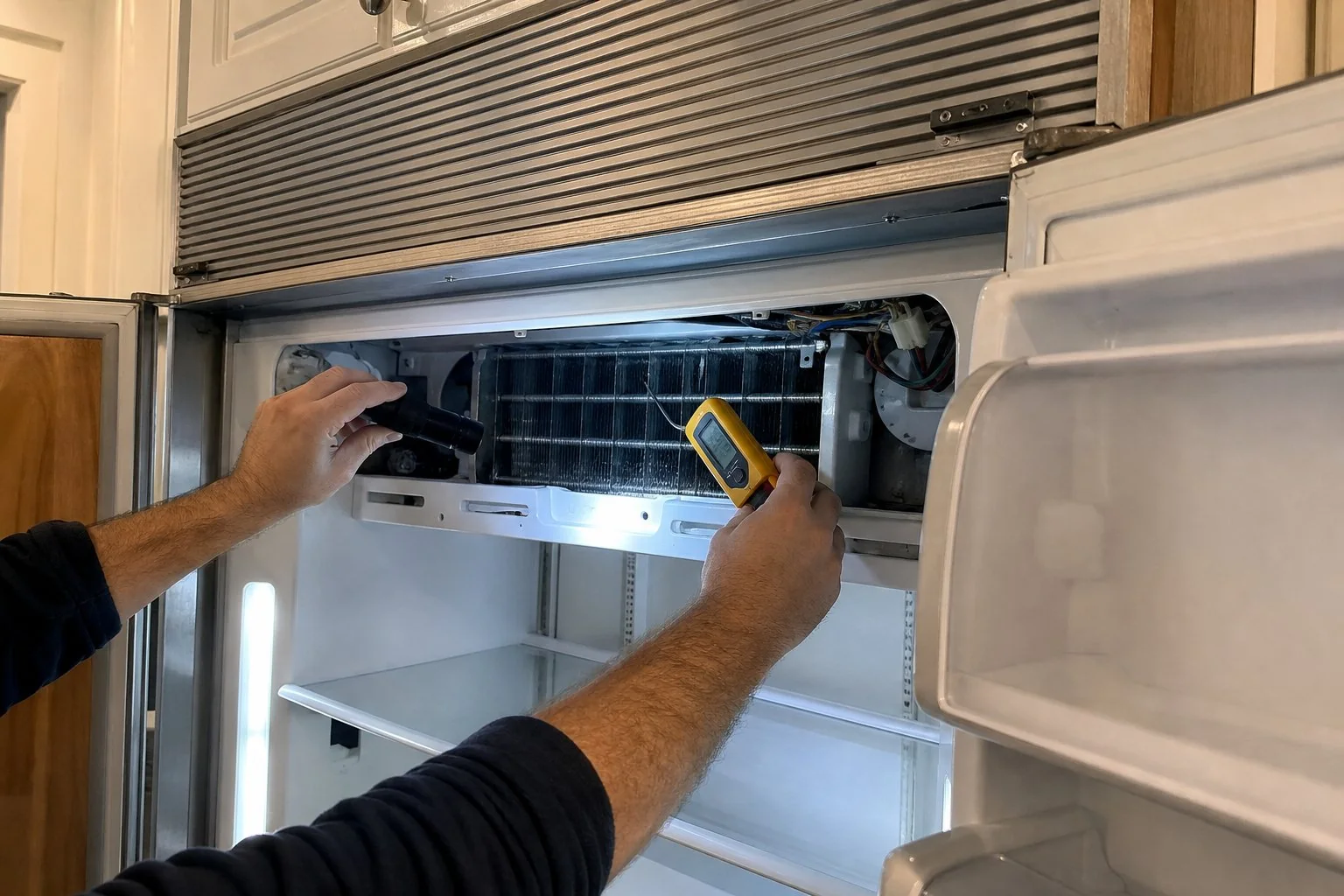
Cold air has to move through the refrigerator in a controlled pattern. If an evaporator fan becomes weak, noisy, obstructed, or stops completely, one compartment may remain cold while another warms up. Shelves may also develop inconsistent temperature zones.
Premium built-in units may use multiple fans or independent cooling sections. That means a technician must determine whether the problem is the fan itself, a sensor, wiring, a control signal, ice buildup, or a separate airflow component.
3. Defrost Failure and Hidden Ice Buildup
A refrigerator can sound like it is running and still fail to cool because frost is blocking the evaporator and air passages. This can happen when the defrost heater, temperature sensor, drain system, wiring, or electronic control is not operating correctly.
The visible symptom may be warm food, moisture, frost, or a fan noise. The actual problem may be hidden behind an interior panel. That is why melting visible ice does not always solve the cause. If the failed component remains, the frost will return.
4. Door Gaskets, Hinges, and Custom Panel Alignment
Built-in refrigerators often carry heavy custom panels. Over time, hinge wear, panel adjustment, cabinet settling, or a damaged gasket can prevent the door from sealing evenly. Warm, humid air enters the compartment, and the refrigerator has to work harder to compensate.
You may notice condensation around the frame, frost near a corner, a door that moves on its own, or a gasket that touches firmly in one area but leaves a gap in another. Replacing the gasket alone may not solve the problem if door alignment or hinge tension is the real cause.
5. Temperature Sensors and Electronic Controls
Premium refrigerators rely on multiple sensors to regulate compressor operation, fan speed, defrost cycles, dampers, and compartment temperatures. If a sensor reports the wrong value, the system may believe the refrigerator is already cold enough and reduce cooling at the wrong time.
Control faults can also cause irregular cycling, error messages, dead fans, or temperature readings that do not match the actual conditions inside the cabinet. Proper testing is essential because an electronic problem can look almost identical to a refrigeration problem.
Tried the basics, but your built-in refrigerator is still warm?
If temperature settings, door checks, and clear interior vents do not restore cooling, Prime Fix can diagnose the airflow, fan, defrost, electronic, and sealed-system components across San Francisco and the Bay Area.
6. Compressor or Sealed-System Trouble
If both compartments are warming, the refrigerator runs for long periods, and airflow components appear to be operating, the issue may involve the compressor or sealed refrigeration system. Possible problems include weak compression, refrigerant loss, restricted flow, or another internal system fault.
Sealed-system work requires proper refrigeration tools, system measurements, leak diagnosis, and a repair plan that makes sense for the specific premium appliance. It is not a practical or safe DIY repair.
7. Installation and Cabinet Ventilation Problems
Sometimes the refrigerator itself is not the only issue. Built-in units depend on correct clearances, level installation, proper anti-tip support, unobstructed air intake and exhaust, and doors that align correctly with surrounding cabinetry.
A unit can cool well for years and then begin struggling after new cabinetry, flooring, decorative trim, insulation, or kitchen modifications change its airflow or alignment. In high-end homes, diagnosing the installation is often just as important as testing the appliance.
Safe Checks Homeowners Can Perform
Before scheduling service, there are several safe checks that may rule out simple issues. These steps should not require removing internal panels, disconnecting wiring, or opening the refrigeration system.
- ●Confirm the temperature settings. Make sure the controls were not changed accidentally and allow time for the cabinet to stabilize after adjustment.
- ●Clear interior vents. Move food packages away from air outlets and avoid packing shelves so tightly that circulation is restricted.
- ●Inspect the door seal. Look for dirt, gaps, torn areas, or sections that do not make even contact with the cabinet.
- ●Listen for changes. New clicking, buzzing, grinding, or a fan that repeatedly starts and stops can help identify the affected system.
- ●Check for frost or water. Unusual ice, condensation, or pooling water may point to a defrost, drainage, or sealing problem.
- ●Avoid deep disassembly. Internal panels, wiring, fans, and sealed refrigeration components should be inspected by a qualified technician.
Why Specialized Repair Matters
Premium built-in refrigerators are expensive appliances integrated into expensive kitchens. A repair must protect both. Pulling the unit incorrectly can damage flooring, cabinetry, custom panels, water lines, or electrical connections. Misdiagnosing the cooling system can lead to unnecessary parts and repeat failures.
Specialized repair means understanding how the appliance is built, how it is installed, how its control logic works, and how the refrigeration and airflow systems interact. It also means testing before replacing — especially when a sensor issue, fan problem, blocked condenser, or installation defect can imitate a major sealed-system failure.
When to Call a Professional
Professional service is appropriate when the refrigerator remains warm after basic checks, runs constantly, develops repeated frost buildup, makes unusual mechanical sounds, displays errors, leaks water, or cannot keep temperature stable.
You should also schedule service when the freezer is cold but the refrigerator is warm, when multiple compartments lose cooling, or when the appliance recently underwent cabinetry, electrical, flooring, or kitchen renovation work.
Why Choose Prime Fix for Built-In Refrigerator Repair?
Prime Fix understands that premium refrigeration requires more than a quick parts swap. The appliance, installation, custom panels, ventilation, controls, and cooling system all need to be considered together.
For homeowners across San Francisco, Marin, the Peninsula, the East Bay, the South Bay, and surrounding Bay Area communities, Prime Fix provides careful diagnostics and repair for premium built-in refrigerators. Whether the issue involves airflow, condenser maintenance, fans, defrost components, sensors, controls, doors, or the sealed system, the goal is to identify the real cause and restore reliable cooling.
 A properly serviced built-in refrigerator should cool consistently, operate efficiently, and protect both your food and your premium kitchen investment.
Final Thought: Do Not Treat a Built-In Refrigerator Like a Standard Unit
A premium built-in refrigerator may stop cooling because of something relatively simple, such as a dirty condenser, blocked vent, weak gasket, or failed fan. It may also have a defrost, control, installation, compressor, or sealed-system problem that requires deeper testing.
Start with safe basics: confirm the settings, clear interior vents, inspect the door seal, and look for frost, water, or unusual sounds. If cooling does not return, avoid guesswork. Contact Prime Fix for specialized built-in refrigerator repair in San Francisco and the Bay Area.