Most people notice an oven problem at the worst possible moment. Dinner is halfway ready, guests are coming, and suddenly something isn’t right. The temperature feels off. The food cooks unevenly. Or the oven simply refuses to turn on. Small oven issues rarely fix themselves. They usually grow into bigger problems. The trick is learning to recognize the early warning signs before a minor repair turns into a full replacement. After years of working with ovens across San Francisco homes, technicians see the same symptoms again and again. Some are subtle. Others are hard to ignore.
Let’s walk through the most common ones.
Food Cooks Unevenly
You bake a tray of cookies. The ones on the left burn. The ones on the right look pale and underdone. That’s not a recipe problem. Uneven cooking often means the oven struggles to distribute heat. Sometimes the heating element is wearing out. Sometimes the convection fan slows down or stops moving air the way it should. In gas ovens, the igniter may weaken and fail to maintain stable heat. People often try to solve this by rotating trays or adjusting cooking time. It works for a while. Then the problem gets worse. When heat stops circulating correctly, the oven needs a proper inspection.
The Oven Takes Forever to Preheat
An oven should reach temperature fairly quickly. If it takes fifteen or twenty minutes just to get close to 350°F, something inside isn’t doing its job. The usual suspect is the heating element or igniter. Electric ovens rely on strong, consistent heat from the element. Gas ovens depend on a healthy igniter to start the burner. When those parts wear down, the oven still works. Just slowly. And inefficiently. Many homeowners assume the appliance is simply “getting old.” In reality, replacing one small component often brings the oven back to normal performance.
The Temperature Doesn’t Match the Setting
You set the oven to 375°F. The food finishes way too quickly. Or it takes much longer than expected. That’s a classic thermostat issue. Modern ovens rely on temperature sensors to keep the heat stable. When the sensor drifts out of calibration, the oven starts guessing. Sometimes it overheats. Sometimes it stays too cool. This problem sneaks up on people because the oven still turns on and appears to work. The only clue is inconsistent cooking results. A technician can test the sensor and recalibrate or replace it if needed.
Strange Smells While Cooking
Some smells are normal. A little odor during self-cleaning mode, or when food spills onto a hot surface, happens in almost every kitchen. But sharp electrical smells are a different story. If you notice a burning plastic scent, the wiring or internal insulation may be overheating. Gas ovens can also develop unusual smells when burners don’t ignite properly. Don’t ignore that signal. Electrical components inside ovens operate at high temperatures. If something starts melting or shorting out, the risk grows quickly. This is a good moment to step back and call a professional.
The Oven Won’t Turn On
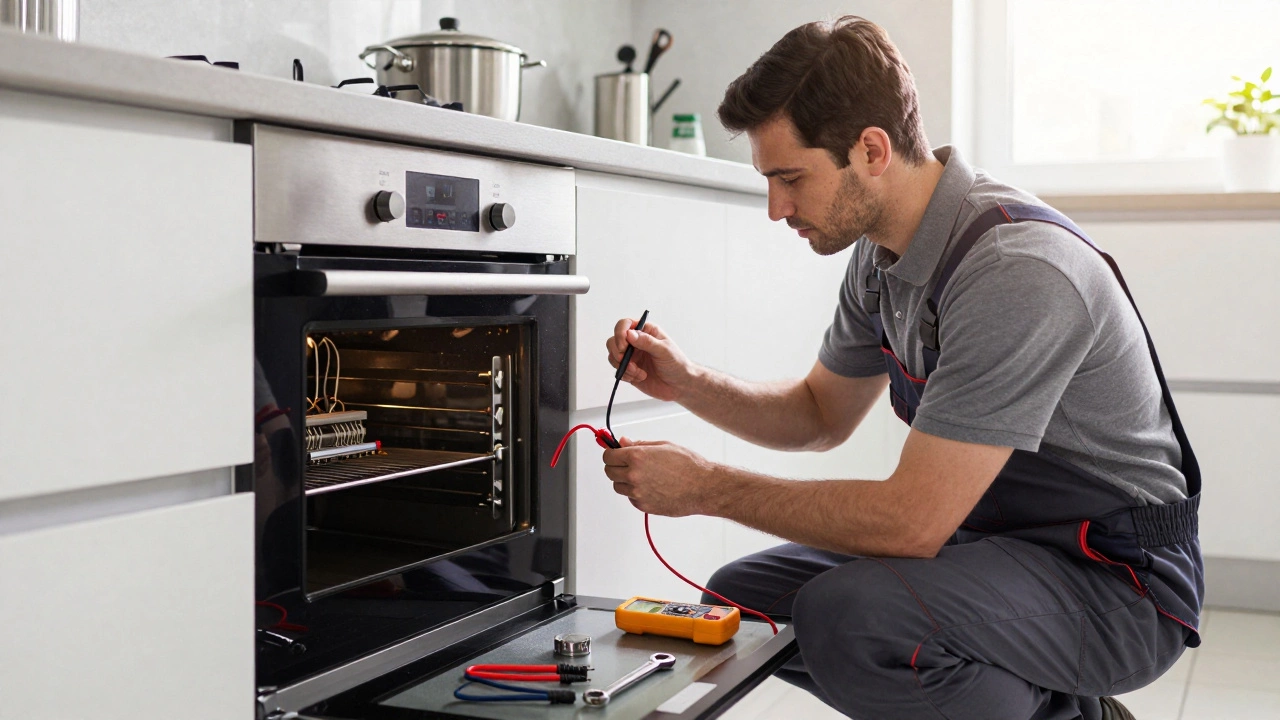
This one is straightforward and frustrating. You press the controls. Nothing happens. The issue could be simple. A blown fuse. A tripped circuit breaker. Sometimes a control board fails and shuts the oven down completely. Modern ovens rely heavily on electronics. When the main board stops responding, the appliance loses its brain. Diagnosing that problem takes proper tools and experience. Guessing rarely works.
The Oven Door Won’t Close Properly
It may seem like a minor annoyance. The door doesn’t seal tightly, or it pops open slightly when you try to close it. That small gap lets heat escape constantly. The oven then struggles to maintain temperature. Cooking times stretch out. Energy use climbs. Eventually other components work harder than they should. Most of the time the culprit is a worn hinge or a damaged door seal. Both are repairable. But ignoring the issue puts extra strain on the entire appliance.
Sparks or Visible Damage
If you ever see sparks inside an oven, stop using it immediately. Electric ovens sometimes spark when the heating element cracks. Once that protective coating breaks, the exposed metal can arc during operation. Gas ovens may produce small flare-ups if burners become clogged with grease or debris. Either situation needs attention right away. Continuing to cook with damaged components risks further damage to the appliance and the kitchen.
Loud or Unusual Noises
Ovens aren’t completely silent. Fans spin. Metal expands with heat. Still, loud buzzing, rattling, or grinding noises are not normal. Convection models often develop fan problems after years of use. Bearings wear down. Blades loosen slightly. The sound usually starts small and gets louder over time. Ignoring that noise can lead to fan failure, which affects temperature consistency. It’s better to address it early.
The Self-Cleaning Function Stops Working
Self-cleaning cycles push ovens to extremely high temperatures. That feature puts a lot of stress on internal components. If the cycle stops halfway or refuses to start, the door lock system or control board may be struggling. Many homeowners stop using the feature and move on. That’s understandable. Still, the malfunction can hint at larger electrical issues inside the oven. A technician can quickly determine whether the repair is simple or something more involved.
When It’s Time to Call a Professional
Some appliance issues invite a quick DIY attempt. A loose rack. A burned-out oven light. Those are easy fixes. But heating systems, gas components, electronic boards, and temperature sensors belong in trained hands. Technicians see these problems daily. They know how to test components safely and pinpoint the exact cause without replacing parts blindly. For homeowners in San Francisco, professional service often saves both time and money. Instead of guessing, you get a clear answer and a proper repair.
A Quick Word to Homeowners
Your oven works hard. Weeknight dinners, holiday meals, late-night reheated pizza. It handles a lot of heat and constant use. When something starts to feel off, trust that instinct. Small symptoms usually point to a part that’s beginning to fail. Fixing it early keeps the repair simple and prevents bigger breakdowns later. If your oven shows any of these warning signs, experienced technicians can inspect the appliance and bring it back to reliable working condition. And dinner plans won’t have to change.