Your outdoor grill lights normally. The burners seem to be working. The temperature gauge climbs, and everything looks ready for cooking. But once the food goes on, the problem becomes obvious: one side of the grill sears quickly while another barely browns.
Steaks placed only a few inches apart may cook at noticeably different speeds, leaving you constantly moving food around just to get everything finished at the same time.
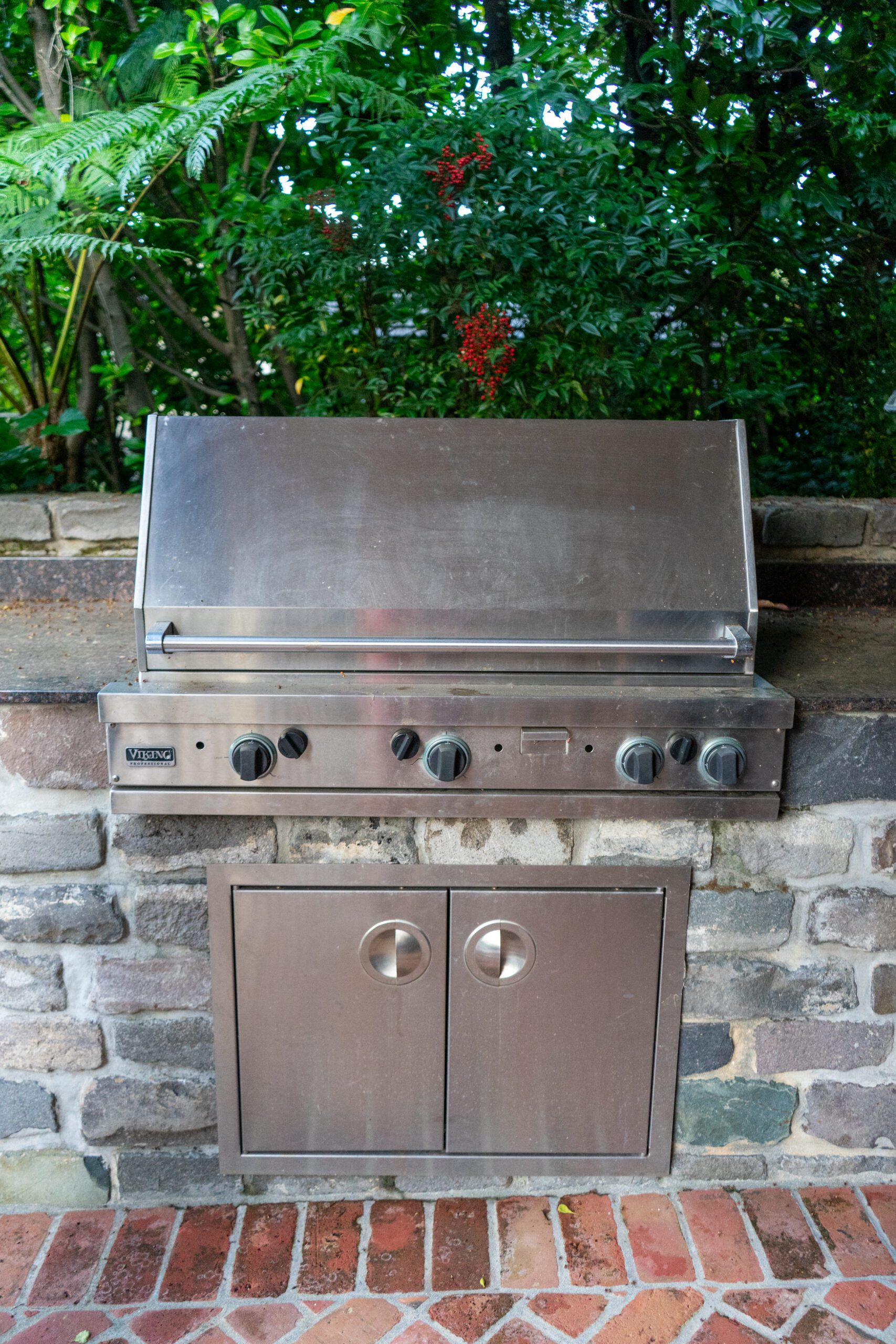
Some temperature variation across a grill is normal. But if a grill that once heated evenly has developed obvious hot and cold spots, something may have changed in the way heat is being produced or distributed.
On premium outdoor grills, uneven heating can be connected to burner condition, grease and debris buildup, heat-distribution components, gas flow, or other parts of the system.
1. Burner Ports May Be Partially Blocked
Gas burners rely on a series of small openings to distribute flame across the cooking area. Over time, those openings can become partially restricted by grease, food residue, debris, or other buildup.
The burner may still ignite, which makes the problem easy to overlook. But instead of producing a consistent flame across its length, certain sections may burn normally while others produce a weaker flame.
You may notice:
- ●One section of the burner has a noticeably smaller flame
- ●Flame appears inconsistent along the burner
- ●One area of the cooking surface takes longer to preheat
- ●Food repeatedly cooks faster in the same location
2. Grease and Food Buildup Can Change How Heat Moves
A grill does not have to look extremely dirty for buildup to affect performance. Grease, carbonized food, drippings, and cooking residue accumulate below the grates over time.
Depending on the grill’s design, this buildup can affect burners and the components responsible for spreading heat across the cooking surface. The result may be concentrated heat in one area and weaker heating in another.
Regular cleaning is not only about appearance. On an outdoor grill, it can also affect airflow, flame quality, heat distribution, and overall cooking performance.
3. A Burner May Be Wearing Out
Outdoor grill burners operate under demanding conditions. They are repeatedly exposed to high temperatures, grease, food acids, moisture, and outdoor air. Eventually, burner components can deteriorate.
A burner does not necessarily stop working all at once. Corrosion, cracks, damaged ports, or deterioration can change the flame pattern while still allowing the burner to ignite.
- ●Uneven flame along one burner
- ●One burner produces less heat than the others
- ●Flames appear where they normally did not
- ●One cooking zone takes much longer to heat
4. Heat-Distribution Components May Be the Real Problem
The burner is only one part of the heating system. Depending on the grill design, heat may pass through or around additional components before reaching the cooking grates.
These may include:
- ●Heat shields
- ●Briquettes or briquette trays
- ●Ceramic components
- ●Radiant trays or other heat-distribution systems
If these components become damaged, misaligned, heavily coated in grease, broken, deteriorated, or incorrectly installed after cleaning, the grill may develop noticeable temperature differences even when the burners themselves are operating.
5. One Burner May Be Producing Less Heat Than the Others
On a multi-burner grill, compare the burners. If three burners produce strong, consistent heat while one zone stays noticeably cooler, the problem may be isolated to that particular burner or its gas supply.
An isolated cold zone may point toward burner restriction, burner deterioration, ignition or flame-stability issues, a control valve problem, a localized gas-flow issue, or the heat-distribution components above that burner.
If several or all burners are weak, the diagnosis may move toward something affecting the grill more broadly.
6. Gas Flow Can Affect More Than Maximum Temperature
Gas-supply problems do not always result in a grill that refuses to light. Sometimes the grill ignites normally but does not deliver the same heat output it once did.
Depending on the installation and grill, possible causes can involve the regulator, supply system, control valves, or other components affecting gas flow.
One useful observation is whether the flame changes when additional burners are turned on. If one burner looks normal by itself but becomes noticeably weaker when several additional burners are operating, that information can be useful during professional diagnosis.
7. Wind Can Create Temporary Hot and Cold Zones
Because outdoor grills operate outside, the appliance itself is not always responsible for every temperature difference. Strong or persistent wind can affect flame behavior and heat distribution, especially in exposed outdoor kitchens.
Consider whether uneven cooking:
- ●Happens only on particularly windy days
- ●Changes depending on wind direction
- ●Disappears under calmer conditions
- ●Always affects the same section regardless of weather
If the same section remains cold regardless of weather conditions, wind is much less likely to be the primary cause. Never create makeshift wind barriers that interfere with required grill ventilation or clearances.
8. The Temperature Gauge Does Not Show the Whole Cooking Surface
A built-in thermometer provides useful information, but it does not measure the temperature at every point across the cooking grates. The grill may display a normal overall temperature while one cooking zone is significantly hotter or cooler than another.
Pay attention if:
- ●One steak sears while another does not
- ●Vegetables repeatedly burn in one section
- ●Food takes much longer on one side
- ●You constantly rotate food around the grill
9. Cleaning Can Sometimes Create an Uneven-Heating Problem
If uneven heating began immediately after a deep cleaning, check whether removable components were reinstalled correctly.
Heat shields, radiant components, briquette trays, cooking grates, or burner-related parts that are not positioned correctly can change how heat moves through the grill.
If the grill heated evenly before cleaning and developed a cold zone immediately afterward, component placement is one of the first things worth reviewing. Always follow the manufacturer’s instructions for your specific grill model.
10. Premium Grills Can Use Different Heating Systems
High-end outdoor grills from manufacturers such as Lynx, Viking, Wolf, and Hestan are designed to provide powerful, controlled cooking performance, but the exact heating system varies by brand and model.
Burner designs, infrared components, ceramic briquettes, heat-distribution systems, ignition systems, and internal layouts are not identical across premium grills. That matters when diagnosing uneven heating.
A solution that applies to one conventional gas grill may not necessarily apply to a premium built-in model. If a high-end grill develops hot and cold zones that were not present before, diagnosis should consider the specific heating system rather than assuming that every uneven-heating problem is simply a dirty burner.
What Your Grill’s Hot and Cold Spots Can Tell You
| What You Notice | Possible Cause | First Step |
|---|---|---|
| One small area stays cooler | Blocked burner ports or heat-distribution issue | Inspect accessible components |
| One entire burner zone is weak | Burner or localized gas-flow problem | Compare flame with other burners |
| All burners seem weaker | Gas supply or regulator-related issue | Professional diagnosis may be needed |
| Flame is even but cooking is not | Heat-distribution components | Check placement and condition |
| Problem started after cleaning | Component installed incorrectly | Review manufacturer instructions |
| Uneven heat appears only in strong wind | Outdoor airflow | Compare performance in calm conditions |
| Burner looks damaged or corroded | Burner deterioration | Have the burner inspected |
| Flame changes when other burners turn on | Possible gas-flow issue | Schedule professional diagnostics |
What Can You Safely Check Yourself?
Before scheduling grill service, there are several observations you can make without disassembling gas components:
- ●Whether the same cooking area is consistently hotter or colder
- ●Whether all burners ignite normally
- ●Whether flame appears reasonably even along accessible burners
- ●Whether visible burner openings have obvious debris
- ●Whether cooking grates and removable heat components are positioned correctly
- ●Whether there is excessive grease or food buildup
- ●Whether one burner performs differently from the others
- ●Whether the problem changes with wind conditions
Don’t Just Turn the Grill Higher
When one part of the grill is too cool, the natural response is to increase the heat. But that can create a new problem.
The weak zone may improve only slightly while the already-hot section becomes even hotter. Instead of solving uneven heating, you end up compensating for it by constantly moving food around.
When Should You Call a Professional?
Consider professional outdoor grill diagnostics if:
- ●Hot and cold spots persist after routine cleaning
- ●One burner is noticeably weaker than the others
- ●A burner has visible damage or corrosion
- ●Flame distribution has changed
- ●Several burners become weak when used together
- ●The grill takes significantly longer to preheat
- ●Uneven heating keeps returning
- ●You experience repeated ignition problems
- ●You smell gas or notice unusual flame behavior
Uneven Heating on Lynx, Viking, Wolf & Hestan Outdoor Grills
Premium outdoor kitchens are often built around grills intended to provide precise, repeatable cooking performance.
When a Lynx, Viking, Wolf, Hestan, or other high-end outdoor grill begins developing noticeable hot and cold spots, the cause can range from routine buildup to a burner, heat-distribution, gas-flow, or control-related issue.
Because designs vary between brands and models, the best repair approach begins with identifying where the temperature difference originates rather than simply replacing the burner or increasing the gas setting.
Outdoor Grill Cooking Unevenly?
Prime Fix provides professional outdoor grill diagnostics, maintenance, and repair throughout San Francisco and the Bay Area. We can evaluate burner performance, flame distribution, internal heat components, ignition, controls, and gas delivery to determine what is causing uneven heating.
Outdoor Grill Service in San Francisco & the Bay Area
If your outdoor grill lights normally but no longer heats evenly, Prime Fix can help determine what has changed.
Prime Fix provides professional outdoor grill diagnostics, maintenance, and repair throughout San Francisco and the Bay Area, including service for premium built-in outdoor cooking appliances.
Your grill does not have to stop heating completely to have a problem. Sometimes the first sign is simply that dinner suddenly requires a lot more moving around the grill than it used to.