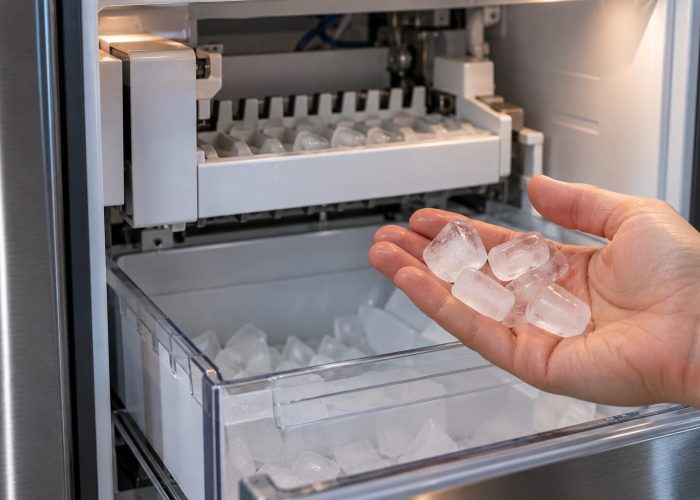
Your ice maker is still working. You hear it cycle, there is ice in the bin, and there are no obvious error messages. But there is one problem: the ice is being made much more slowly than it used to be.
Maybe the bin used to stay full and now it is almost empty by the end of the day. Maybe you are getting a few batches of ice, but not enough for normal household use. Or perhaps each new batch seems to take much longer than expected.
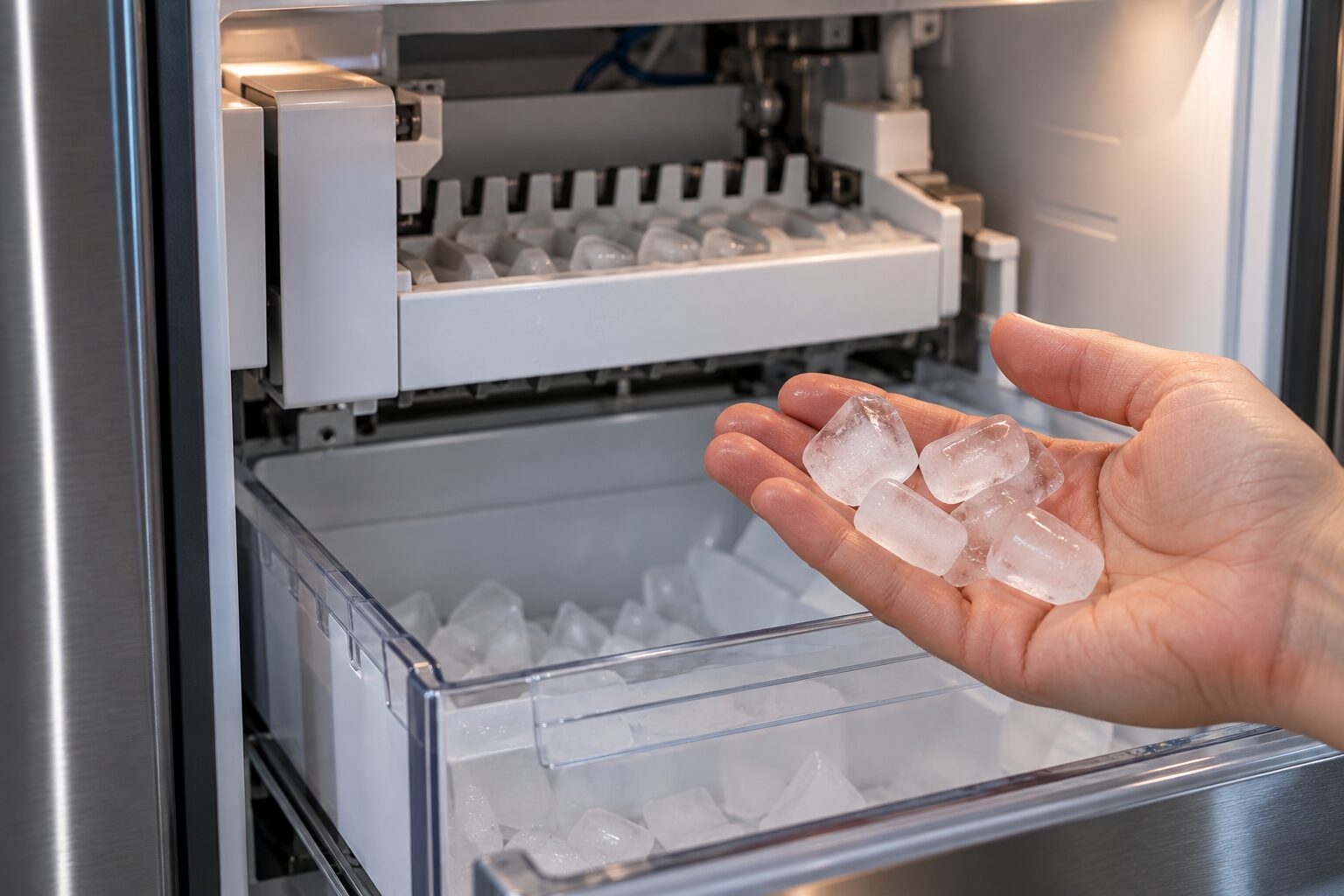
Low ice production does not always mean the ice maker has completely failed. In many cases, it is an early sign that something is affecting water flow, freezer temperature, airflow, or the ice-making system itself.
1. The Freezer May Not Be Cold Enough
An ice maker depends on the freezer maintaining the proper temperature consistently. The freezer can still feel cold — and frozen food can still look completely normal — while the temperature is slightly too warm for efficient ice production.
Making ice requires more than simply keeping already-frozen food frozen. Water needs to freeze completely before the ice maker can release one batch and begin another. If the freezer is warmer than it should be, each batch may take longer.
You might notice:
- ●The ice bin fills much more slowly than before
- ●Ice cubes take longer to form
- ●Cubes seem softer or wetter when released
- ●Ice occasionally clumps together
- ●Frozen food still appears normal
2. Frequent Door Openings Can Slow Ice Production
Every time the freezer door opens, warmer room air enters the compartment. Normally, the appliance compensates and returns to the proper temperature. But frequent or prolonged door openings can increase the amount of time required for each batch of ice to freeze.
This can be especially noticeable during:
- ●Warm weather
- ●Parties or gatherings
- ●Frequent cooking or grocery loading
- ●Periods when the household is using more ice than usual
If the bin is empty because everyone is using more ice, the ice maker may be operating normally but simply cannot keep up with demand. If production remains unusually slow after ice use returns to normal, another cause may be involved.
3. A Water Filter May Be Restricting Flow
An ice maker needs an adequate supply of water for every fill cycle. If the refrigerator’s water filter becomes restricted, water may still reach the ice maker — just not as quickly or in the quantity it should.
Other clues may include:
- ●Smaller-than-normal ice cubes
- ●Hollow or irregular cubes
- ●Slower water flow from the refrigerator dispenser
- ●Ice production gradually declining over time
If the filter is due for replacement according to the manufacturer’s recommendations, replacing it with the correct filter is a reasonable first step. If production dropped immediately after a filter change, make sure the correct filter was installed and seated properly.
4. Low Water Pressure Can Affect Each Fill Cycle
The filter is not the only thing that can reduce water flow. Low household water pressure, a partially closed supply valve, a kinked water line, or a restriction somewhere in the supply can prevent the ice maker from receiving enough water.
Instead of producing no ice at all, the system may continue making smaller or incomplete batches. If the cubes are consistently smaller than they used to be, the issue may be how much water is entering during each fill rather than how quickly the water freezes.
5. The Water Inlet Valve May Not Be Delivering Water Properly
The water inlet valve controls water entering the appliance for ice production and, on applicable models, the water dispenser. A valve does not always fail completely — it may begin operating inconsistently or allow less water through than expected.
Possible symptoms include:
- ●Small ice cubes
- ●Incomplete ice molds
- ●Irregular batch sizes
- ●Gradually declining ice production
Because similar symptoms can result from the filter, water pressure, or another supply restriction, the water system should be diagnosed before replacing components based on symptoms alone.
6. Airflow Inside the Freezer May Be Restricted
Cold air needs to circulate throughout the freezer. If food packages, containers, or ice buildup block vents, the temperature around the ice maker may be different from the temperature elsewhere in the compartment.
Check for:
- ●Food packed tightly against vents
- ●Large containers blocking airflow
- ●Frost or ice near air passages
- ●Significant temperature differences within the freezer
Try reorganizing the freezer so visible vents have space around them. If ice production improves over the next day or two, restricted airflow may have been contributing to the problem.
7. Frost or Ice Buildup May Be Interfering With the System
Abnormal frost is worth paying attention to. Depending on the refrigerator design, frost or ice buildup can interfere with airflow, fans, sensors, fill components, or other parts involved in ice production.
You may notice:
- ●Frost around the ice maker area
- ●Ice buildup near vents or interior panels
- ●Ice production slowing gradually
- ●Unusual fan sounds
- ●The same frost problem returning after it is removed
8. The Door May Not Be Sealing Completely
A freezer door that does not seal properly can introduce small amounts of warm, humid air throughout the day. The freezer may continue cooling well enough that the problem is not immediately obvious, but the additional heat load can affect ice-making speed.
Inspect the door area for:
- ●Food packages preventing complete closure
- ●Dirt or residue on the gasket
- ●Torn or damaged gasket sections
- ●Condensation around the door
- ●Frost forming near the front of the freezer
9. The Ice Maker May Not Be Completing Cycles Normally
Sometimes the water supply and freezer temperature are fine, but the ice-making mechanism itself is slowing down.
An ice maker relies on several steps happening correctly:
- Water enters the mold.
- The water freezes.
- The system determines the ice is ready.
- The cubes are released.
- A new fill begins.
If a sensor, thermostat, motor, control, or another component involved in that sequence is not working correctly, the time between batches may increase. The ice maker can still appear to work — it simply does not work often enough.
10. The Refrigerator Itself May Be Working Harder Than Usual
Reduced ice production can sometimes be one of the first noticeable signs of declining refrigerator performance. The appliance may still keep food cold, but conditions inside the freezer may not be as stable as they once were.
Possible contributing factors can include:
- ●Restricted condenser airflow
- ●Dust buildup around accessible condenser areas
- ●Fan performance problems
- ●Temperature sensor issues
- ●Defrost problems
- ●Changes in refrigeration-system performance
Ice production is sensitive to changes in freezer conditions, so the ice maker may show symptoms before homeowners notice a more obvious cooling problem.
What Slow Ice Production Can Tell You
| What You Notice | Possible Cause | First Step |
|---|---|---|
| Ice is slower, but cubes look normal | Freezer temperature or heavy ice use | Check actual temperature and recent usage |
| Cubes are smaller than before | Restricted water flow | Check filter and dispenser flow |
| Small cubes and weak dispenser flow | Filter, water supply, or inlet issue | Check accessible supply conditions |
| Production slows during heavy use | Frequent door openings or high demand | Allow time for the bin to recover |
| Frozen food seems fine, but ice is slow | Temperature or airflow issue | Measure temperature and check vents |
| Frost appears near the ice maker | Airflow, sealing, or defrost issue | Check vents and door sealing |
| Ice maker cycles irregularly | Ice maker component or control issue | Professional diagnostics |
| Production keeps declining | Cooling, water, or ice-maker problem | Have the system inspected |
What Can You Safely Check Yourself?
Before scheduling service, there are several useful checks you can make without disassembling the refrigerator:
- ●Check the actual freezer temperature
- ●Make sure the freezer is not excessively packed
- ●Clear space around visible air vents
- ●Check whether the freezer door closes completely
- ●Inspect the accessible gasket for dirt or damage
- ●Look for unusual frost or ice buildup
- ●Check whether ice cubes are smaller than before
- ●Compare water-dispenser flow with what you normally expect
- ●Check the refrigerator’s filter status
- ●Look for visible kinks in accessible water tubing
Then give the ice maker some time. Ice production happens in batches, so a change will not necessarily be obvious within an hour. Look at the overall pattern rather than judging the system after a single cycle.
Is the Ice Maker Actually Slow — or Are You Just Using More Ice?
This is worth checking before assuming the appliance needs repair. If the household suddenly starts using significantly more ice, the bin may stay low even though the ice maker is operating normally.
A simple test is to reduce ice use temporarily and see whether the bin begins recovering. If it does, demand may simply be exceeding production. But if the bin remains nearly empty after an extended period of normal or minimal use, the system may genuinely be producing too little ice.
When Should You Call a Professional?
Consider professional refrigerator or ice maker diagnostics if:
- ●Ice production has noticeably declined and does not recover
- ●The freezer is not maintaining a stable temperature
- ●Cubes have become consistently smaller or irregular
- ●Water flow from the dispenser is weaker than before
- ●A new filter does not improve production
- ●Frost or ice buildup keeps returning
- ●The ice maker cycles only occasionally
- ●You hear unusual fan or ice-maker noises
- ●Basic airflow, filter, and loading checks make no difference
Don’t Wait for the Ice Maker to Stop Completely
It is easy to ignore slow ice production because the appliance is technically still making ice. But a gradual decline can be useful information.
If your ice maker used to keep the bin full and now produces only a small amount under the same household conditions, something has changed. Finding the cause while the system is still operating may help identify a developing problem before you end up with no ice — or before a cooling issue begins affecting the rest of the refrigerator.
Ice Maker Producing Less Ice Than It Used To?
Prime Fix provides professional refrigerator and ice maker diagnostics, maintenance, and repair throughout San Francisco and the Bay Area. We can evaluate freezer temperature, airflow, water supply, filtration, fill performance, sensors, ice-maker operation, and cooling performance to identify what is slowing ice production.
Ice Maker & Refrigerator Service in San Francisco & the Bay Area
If your ice maker is running but producing much less ice than it used to, Prime Fix can help determine what is slowing it down.
Prime Fix provides professional refrigerator and ice maker diagnostics, maintenance, and repair throughout San Francisco and the Bay Area.
An ice maker doesn’t have to stop completely to have a problem. Sometimes the first warning is simply an ice bin that no longer fills the way it used to.