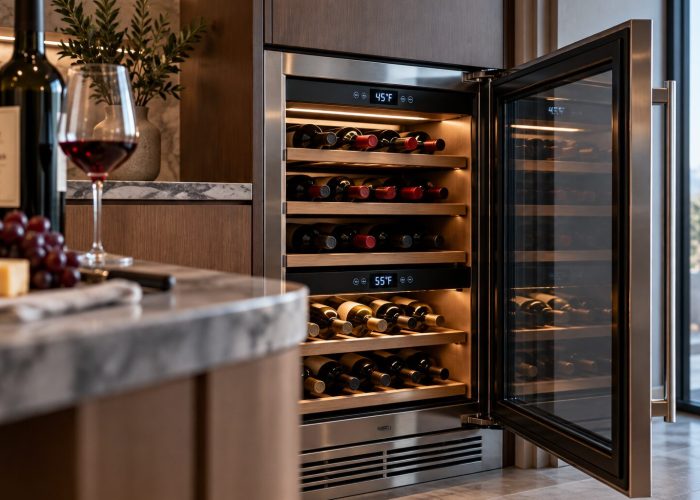
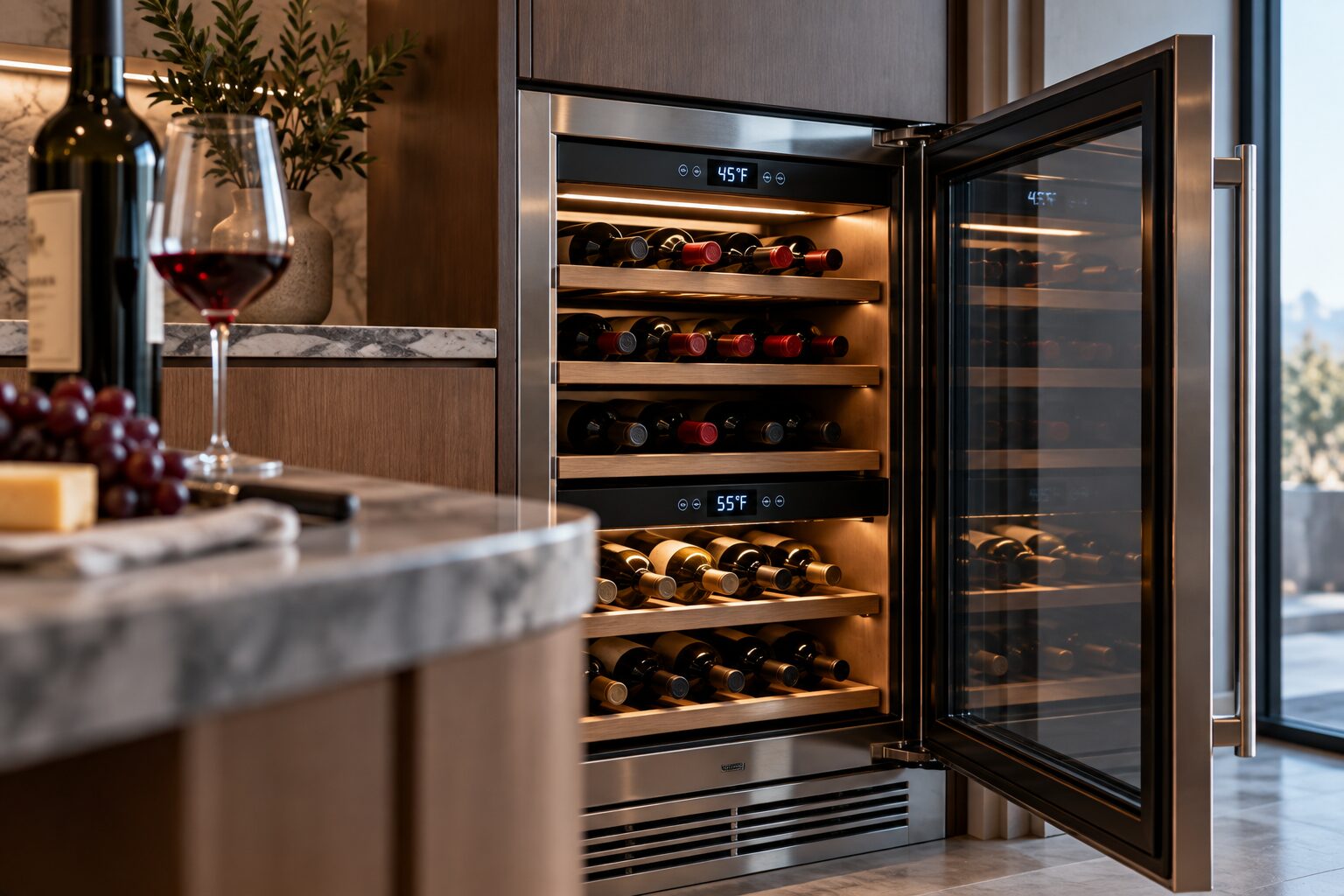
A Sub-Zero wine cooler is designed to maintain carefully controlled conditions for wine storage. So when the temperature display starts moving up and down — or one zone seems warmer than it used to — it is understandable to wonder whether something is wrong.
The important distinction is that not every temperature change means the wine cooler is failing.
Door openings, newly loaded bottles, changes in room temperature, and normal cooling cycles can cause temporary fluctuations. But when the temperature repeatedly moves outside the expected range, takes too long to recover, or one wine zone behaves differently from another, it may point to an airflow, sealing, sensor, fan, control, or cooling-system issue.
For Sub-Zero Wine Storage owners in San Francisco and the Bay Area, here is how to tell the difference between a temporary temperature change and a problem worth investigating.
How Much Temperature Fluctuation Is Normal in a Sub-Zero Wine Cooler?
Seeing the displayed temperature move slightly does not automatically indicate a malfunction. Refrigeration temperatures can fluctuate, and factors such as door openings, room temperature, humidity, and other operating conditions can influence what you see on the display.
The key question is not whether the temperature ever changes, but what happens afterward. A healthy system should generally be able to recover and return toward its intended operating temperature.
- ●Temperature changes become increasingly frequent
- ●The displayed temperature continues rising
- ●The unit takes unusually long to recover
- ●One zone behaves differently from another
- ●The temperature no longer reaches its setting
1. The Door Has Been Opened Frequently
Every time the wine cooler door opens, warmer room air enters the cabinet. During entertaining, reorganizing bottles, cleaning, or choosing wine, the door may stay open much longer than it normally would.
The temperature can rise temporarily, and the cooling system then needs time to remove that additional heat. If the temperature returns to normal and remains there, the change may simply have been related to use. If it struggles to recover, however, another issue may be contributing to the problem.
2. You Recently Added Several Bottles
A large number of newly loaded bottles can temporarily affect cabinet temperature. If the bottles entered the wine cooler warmer than the selected storage temperature, the appliance must remove that additional heat.
The more bottles added at once, the more cooling work may be required before the entire cabinet stabilizes again.
3. Room Temperature Can Affect How Hard the Unit Works
Even a premium built-in wine storage system operates within the conditions of the room around it. When the surrounding space becomes warmer, the refrigeration system has more heat to remove.
This can be especially noticeable in kitchens or entertainment areas that:
- ●Receive strong afternoon sun
- ●Become warmer while cooking
- ●Have limited ventilation
- ●Contain other heat-producing appliances nearby
Room temperature alone should not be used to explain persistent poor performance. If the wine cooler consistently cannot maintain its intended temperature under appropriate operating conditions, further investigation may be necessary.
4. The Condenser May Need Attention
A refrigeration system needs to release the heat it removes from inside the cabinet. If dust, pet hair, or debris accumulates around accessible condenser areas, heat transfer may become less efficient.
Possible clues include:
- ●Longer operating cycles
- ●More frequent operation
- ●Slower recovery after opening the door
- ●A gradual decline in performance
5. The Door May Not Be Sealing Completely
A small sealing problem can create a surprisingly large temperature issue. If warm room air continually enters the wine cooler, the cooling system has to compensate for that added heat.
Inspect accessible areas around the door and gasket for:
- ●Dirt or residue
- ●Visible gaps, cracks, or damage
- ●Sections of gasket that do not sit evenly
- ●Bottles or shelving interfering with closure
- ●A door that does not close as firmly as before
6. One Wine Zone Is Warm, but the Other Is Holding Temperature
This is an especially useful symptom on a multi-zone wine storage system. Suppose one compartment remains close to its selected temperature while another consistently runs warmer.
That tells us something important: the entire appliance is not necessarily losing cooling in the same way.
Depending on the model and symptoms, differences between zones may involve:
- ●Air circulation
- ●Temperature sensing
- ●Fan operation
- ●Door sealing
- ●Controls or cooling components associated with that section
7. Internal Airflow May Be Restricted
Maintaining the correct air temperature is only part of wine storage performance. That air also needs to circulate properly.
If bottles are positioned in a way that interferes with airflow, different parts of the cabinet may not maintain the same conditions. One area can remain properly cooled while another becomes warmer.
Check that bottles are arranged appropriately, interior airflow openings are not blocked, shelving is positioned correctly, and the cabinet is not packed in a way that prevents circulation.
8. A Fan May Not Be Moving Air Properly
Depending on the system, fans help move air and support proper refrigeration performance. A fan that becomes obstructed, weak, intermittent, or stops operating correctly can lead to inconsistent temperatures.
- ●One area is warmer than another
- ●Airflow appears reduced
- ●Temperature changes become more frequent
- ●New buzzing or rattling appears
- ●Recovery after opening the door takes longer
9. A Temperature Sensor May Be Giving Incorrect Information
Modern refrigeration depends heavily on temperature sensors. If a sensor is not reading conditions correctly, the control system may not receive an accurate picture of what is happening inside the cabinet.
Possible symptoms include:
- ●The display appears normal while stored bottles seem warmer
- ●Temperature moves up and down without an obvious reason
- ●One zone behaves differently from another
- ●Cooling cycles seem unusually long or short
- ●The cabinet becomes warmer or colder than expected
Professional diagnostics can compare actual cabinet conditions with the information the appliance is receiving from its sensors.
10. The Display Looks Normal, but the Wine Feels Warmer
Touch alone is not a precise way to judge bottle temperature. A bottle may feel different depending on where it is stored, how long it has been inside the unit, and surrounding conditions.
If you suspect a temperature problem, look for a consistent pattern rather than relying on touch alone. Consider:
- ●Whether the displayed temperature is stable
- ●Whether the same bottles repeatedly seem warmer
- ●Whether one zone differs from another
- ●Whether the unit recently recovered from an open door or new load
- ●Whether other symptoms have appeared
11. The Control System May Be Involved
If airflow, loading, room conditions, and door sealing appear normal, an electronic control issue may need to be considered.
The control system uses information from sensors and other components to manage cooling. A problem in this chain can affect how often the unit cools, how it responds to changing temperatures, and whether individual zones maintain their settings correctly.
Electronic components should not be replaced based on symptoms alone. Several different problems can produce similar temperature behavior, which is why proper diagnosis matters.
12. The Cooling System May Be Losing Performance
Temperature instability can sometimes be an early sign of a broader refrigeration problem. The appliance may still cool, still run, and the display may still look reasonably normal much of the time — but recovery becomes slower.
The unit may run longer, temperature rises may become more frequent, and eventually it becomes increasingly difficult to maintain the selected conditions.
Possible causes can involve several parts of the refrigeration system. If basic checks do not explain persistent temperature fluctuations, the system should be professionally evaluated.
Sub-Zero Wine Cooler Temperature Problems at a Glance
| What You Notice | Possible Cause | First Step |
|---|---|---|
| Temperature rises after opening the door | Temporary warm-air entry | Allow time to recover |
| Temperature changed after adding bottles | New warm load | Allow the bottles to cool |
| Temperature rises on warmer days | Increased ambient heat | Check surrounding conditions |
| Unit runs longer than before | Condenser, airflow, or cooling issue | Check approved maintenance areas |
| Temperature rises with door closed | Door seal or cooling problem | Inspect accessible gasket |
| One zone is warm, another is normal | Zone-specific airflow, sensor, fan, or control issue | Check loading and monitor both zones |
| New rattling or buzzing appears | Fan or mechanical issue | Schedule diagnostics if persistent |
| Display seems normal but performance does not | Sensor or temperature-control issue | Professional temperature testing |
| Temperature will not return to setting | Cooling or control problem | Schedule professional diagnostics |
What Can You Safely Check Yourself?
Before scheduling service, you can gather useful information without disassembling the wine cooler:
- ●Whether the door has recently been open for an extended period
- ●Whether many bottles were recently added
- ●Whether the room is warmer than usual
- ●Whether visible ventilation areas are unobstructed
- ●Whether bottles are blocking interior airflow
- ●Whether the door closes completely
- ●Whether one zone behaves differently from another
- ●Whether the appliance is making new or unusual sounds
When Is It Time to Schedule Sub-Zero Wine Cooler Service?
Consider professional diagnostics when:
- ●Temperature fluctuations become persistent
- ●The wine cooler cannot return to its selected temperature
- ●One zone consistently runs warmer than another
- ●Temperature changes occur without heavy use or recent loading
- ●The unit runs significantly longer than it used to
- ●New fan or mechanical noises appear
- ●The door no longer seals properly
- ●An error or service indicator appears
- ●Overall performance is gradually getting worse
Don’t Wait for the Wine Cooler to Stop Cooling Completely
A wine cooler does not need to become warm before there is a problem. Repeated temperature drift, unusually slow recovery, longer run times, or a difference between zones can appear before a more obvious cooling failure.
If your Sub-Zero Wine Storage system previously maintained stable conditions and now behaves differently under the same normal use, the change is worth paying attention to.
Sub-Zero Wine Cooler Temperature Keeps Fluctuating?
Prime Fix provides professional diagnostics, maintenance, and repair for premium wine refrigeration systems throughout San Francisco and the Bay Area. If one zone is warmer than another or your wine cooler no longer maintains stable temperatures, professional diagnostics can help identify the underlying cause.
Sub-Zero Wine Cooler Service in San Francisco & the Bay Area
Prime Fix provides professional diagnostics, maintenance, and repair for premium wine refrigeration systems throughout San Francisco and the Bay Area.
If your Sub-Zero wine cooler temperature keeps fluctuating, one zone is warmer than another, or the unit takes unusually long to return to its setting, a technician can evaluate temperature performance, airflow, door sealing, fans, sensors, controls, and the cooling system to identify the underlying cause.
A small temperature change can be normal. A temperature that repeatedly refuses to stabilize is a different story.