A gas range burner does not have to stop working completely to signal a problem. Sometimes the first sign is much more subtle: the burner lights, but the flame looks weaker than usual, heats unevenly, or appears different from the other burners.
You may notice that water takes longer to boil, one side of a pan heats faster than the other, or the flame does not increase as expected when you turn the control higher.
For homeowners in San Francisco and the Bay Area, these changes are worth paying attention to. Some causes are as simple as a burner cap that needs cleaning or repositioning. Others may involve gas flow, burner components, or the appliance itself and should be inspected by a professional.
What Should a Normal Gas Burner Flame Look Like?
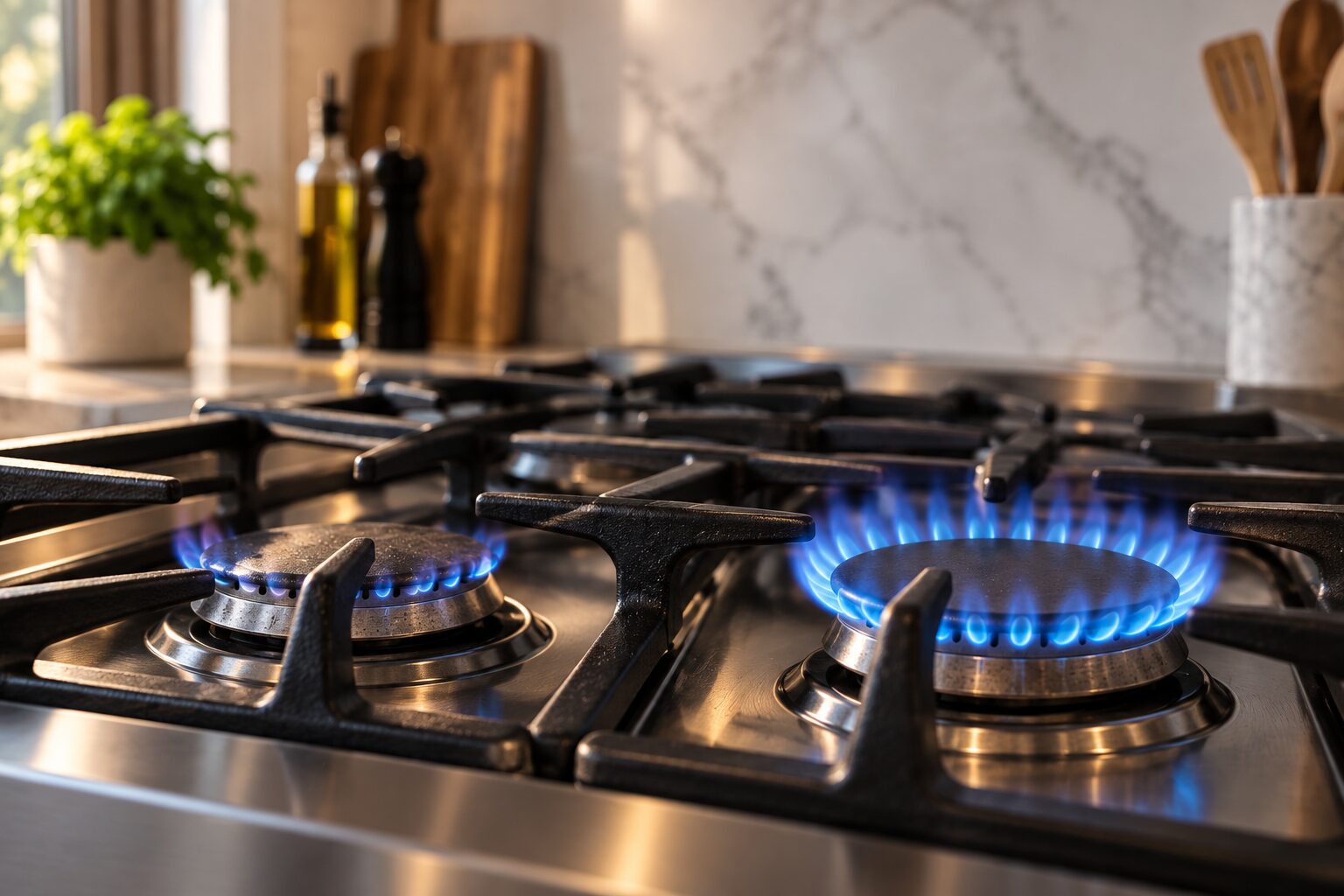
A properly operating gas burner should generally produce a stable, even flame around the burner. The exact appearance can vary depending on the range, burner design, fuel type, and operating conditions. What matters most is a noticeable change from the burner’s normal performance.
Pay attention if:
- ●The flame has become significantly smaller
- ●One side of the burner burns stronger than the other
- ●Parts of the burner do not produce flame
- ●The flame repeatedly goes out
- ●The burner heats noticeably slower than before
- ●The flame changes dramatically when another burner is turned on
- ●You hear unusual sputtering or popping
1. Burner Ports May Be Partially Blocked
One of the most common reasons for an uneven flame is debris around the burner. Cooking spills, grease, crumbs, and food residue can gradually collect around the small openings where gas exits the burner.
If some of those ports become restricted, the flame may no longer spread evenly. You might see a strong flame on one side and little or no flame on another.
2. The Burner Cap May Be Out of Position
A burner cap that is not seated correctly can change how gas and flame are distributed around the burner. This sometimes happens after cleaning, especially when removable burner parts have been taken off and reinstalled.
Possible signs include:
- ●Uneven flame around the burner
- ●Flame appearing stronger on one side
- ●Difficulty maintaining a stable flame
- ●Different performance immediately after cleaning
Once the range is completely cool, check whether removable burner components appear to be sitting flat and correctly positioned according to the manufacturer’s instructions. A small alignment issue can sometimes create a surprisingly noticeable change in burner performance.
3. Moisture May Be Affecting the Burner After Cleaning
Did the problem begin immediately after the cooktop was cleaned? Moisture around burner components can temporarily affect ignition or flame behavior. This is especially possible after a deeper cleaning when removable components were washed.
Allow the burner components to dry completely before using the range again. If the flame remains weak or uneven after everything is fully dry and correctly assembled, moisture is probably not the only cause.
4. More Than One Burner Is Weak
This is an important distinction. If only one burner has a weak or uneven flame, the issue may be localized to that burner. If several or all burners suddenly seem weaker than usual, the problem may involve something affecting the gas supply or appliance more broadly.
For example, you may notice that:
- ●Multiple burners produce smaller flames
- ●Turning on another burner causes an existing flame to become weaker
- ●High settings no longer produce the expected heat
- ●Cooking times have increased across several burners
5. Burner Components May Need More Than Cleaning
Cleaning can solve problems caused by surface debris, but it cannot correct every burner issue. Over time, components can become worn, damaged, misaligned, or otherwise unable to distribute gas properly.
This becomes more likely when the same burner repeatedly develops an uneven flame even after it has been properly cleaned and assembled. A technician can inspect the burner assembly and determine whether cleaning, adjustment, or component replacement is necessary.
6. A Gas Valve or Regulator Issue May Affect Flame Strength
If the burner receives an incorrect or inconsistent amount of gas, the flame may be weaker than expected. Depending on the appliance and installation, the problem may involve components that control or regulate gas flow.
Possible symptoms can include:
- ●Flame does not increase normally when the control is turned higher
- ●Burner output changes unexpectedly
- ●Several burners appear weaker
- ●Burner performance has gradually declined
These components should be diagnosed professionally. Gas pressure and gas-system components are not appropriate areas for DIY troubleshooting.
7. Why Does the Flame Change When Another Burner Turns On?
Suppose one burner looks normal when used alone. Then you turn on a second or third burner and suddenly the first flame becomes noticeably smaller. That is useful diagnostic information.
A very small momentary change may not necessarily indicate a problem, but a significant or repeatable loss of burner output deserves attention.
Rather than trying to adjust the gas system yourself, tell the technician exactly what happens and which combination of burners produces the change. That information can make diagnosis easier.
What About Yellow or Orange Flames?
Flame color can attract attention quickly, but it should be interpreted carefully. Brief orange coloration can sometimes be influenced by contaminants, dust, moisture, or conditions around the burner. Burner and fuel designs can also vary.
However, a persistent and significant change in flame appearance — especially when combined with poor heating, soot, unusual odor, or unstable operation — should not be ignored.
Common Gas Range Flame Problems at a Glance
| What You Notice | Possible Cause | First Step |
|---|---|---|
| Flame is uneven on one burner | Dirty burner ports or misplaced burner cap | Let the range cool and inspect accessible burner parts |
| Flame changed after cleaning | Moisture or incorrect burner assembly | Allow components to dry and check positioning |
| One section has little flame | Restricted burner ports | Follow manufacturer-approved cleaning instructions |
| Several burners are weak | Possible gas-flow or appliance issue | Schedule professional diagnostics |
| Flame weakens when other burners turn on | Possible gas-supply or regulation issue | Have the system professionally inspected |
| Burner remains weak after cleaning | Burner, valve, or other internal issue | Schedule service |
| Persistent abnormal flame with soot | Combustion or gas-related issue | Stop using the affected burner and seek professional service |
What Can You Safely Check Yourself?
Before scheduling service, there are a few basic observations and checks that can be helpful. Once the range is completely cool, you can:
- ●Look for visible food or grease around accessible burner areas
- ●Check whether removable burner caps are positioned correctly
- ●Make sure recently washed burner parts are completely dry
- ●Compare the affected burner with the others
- ●Notice whether the problem happens on low, medium, and high settings
- ●Check whether another burner affects the flame
- ●Look for soot or other unusual residue
What Should You Not Try Yourself?
Gas appliances deserve additional caution. Do not attempt to:
- ●Adjust gas pressure
- ●Modify burner openings
- ●Disassemble gas valves
- ●Adjust or repair a gas regulator
- ●Disconnect gas lines
- ●Bypass safety components
When Is It Time to Call a Professional?
Consider scheduling professional gas range diagnostics if:
- ●Cleaning does not restore an even flame
- ●The same burner repeatedly develops the problem
- ●Several burners have become weak
- ●Burner output has noticeably decreased
- ●The flame changes significantly when other burners are used
- ●The flame will not remain stable
- ●You notice soot
- ●The burner makes unusual popping or sputtering sounds
- ●The problem is becoming progressively worse
The range does not have to stop working completely before it needs attention. In fact, a change in flame strength or distribution can be one of the earliest signs that something is no longer operating as it should.
Why Early Fall Is a Good Time to Pay Attention to Your Range
As San Francisco and Bay Area households move from summer into fall, ranges often begin seeing more regular use.
If you have noticed a burner becoming weaker, heating unevenly, or behaving differently during the past few weeks, it is worth addressing before cooking demands increase later in the season.
A small change in burner performance may only require cleaning or proper reassembly. But if the problem involves gas flow or an internal component, early diagnosis can help prevent an inconvenient failure when you need the range most.
Gas Range Flame Looks Weak or Uneven?
Prime Fix provides professional gas range and cooktop diagnostics, maintenance, and repair throughout San Francisco and the Bay Area. If a burner still ignites but its flame has become weak, uneven, unstable, or noticeably different from the other burners, professional diagnostics can help identify the cause.
Need Gas Range Service in San Francisco or the Bay Area?
Prime Fix provides professional gas range and cooktop diagnostics, maintenance, and repair throughout San Francisco and the Bay Area.
If your burner still ignites but the flame has become weak, uneven, unstable, or noticeably different from the other burners, professional diagnostics can help identify whether the cause is a burner issue, gas-flow problem, or another component.
A burner that still works is not necessarily a burner that is working correctly. Paying attention to changes in flame behavior can help you catch a developing problem early.